
|
Keyword: Perseids
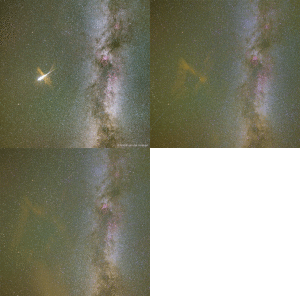 Milky Way and Exploding Meteor
6.08.2017
Next weekend the Perseid Meteor Shower reaches its maximum. Grains of icy rock will streak across the sky as they evaporate during entry into Earth's atmosphere. These grains were shed from Comet Swift-Tuttle.
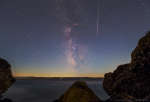 Perseid by the Sea
16.08.2017
Just after moonrise on August 12 this grain of cosmic sand fell by the sea, its momentary flash part of the annual Perseid Meteor Shower. To create the Perseid meteors, dust along the orbit of periodic comet Swift-Tuttle is swept up by planet Earth.
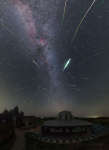 Perseid Meteors over Slovakia
12.08.2019
Tonight is a good night to see meteors. Comet dust will rain down on planet Earth, streaking through dark skies during the peak of the annual Perseid Meteor Shower. The featured composite image was taken during last year's Perseids from the Poloniny Dark Sky Park in Slovakia.
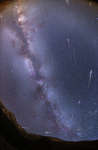 Moonless Meteors and the Milky Way
13.08.2015
Have you watched the Perseid meteor shower? Though the annual shower's predicted peak was last night, meteor activity should continue tonight (August 13/14), best enjoyed by just looking up in clear, dark skies after midnight. Of course, this year's Perseid shower has the advantage of being active near the August 14 New Moon.
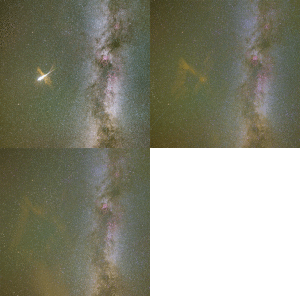 Milky Way and Exploding Meteor
12.08.2015
Tonight the Perseid Meteor Shower reaches its maximum. Grains of icy rock will streak across the sky as they evaporate during entry into Earth's atmosphere. These grains were shed from Comet Swift-Tuttle.
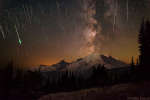 Meteors and Milky Way over Mount Ranier
25.08.2015
Despite appearances, the sky is not falling. Two weeks ago, however, tiny bits of comet dust were. Featured here is the Perseids meteor shower as captured over Mt. Rainier, Washington, USA. The image was created from a two-hour time lapse video, snaring over 20 meteors, including one that brightened dramatically on the image left.
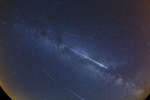 Perseid Meteors and the Milky Way
14.08.2012
Where will the next Perseid meteor appear? Sky enthusiasts who trekked outside for the Perseid meteor shower that peaked over the past few days typically had this question on their mind. Six meteors from...
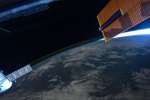 Perseid Below
17.08.2011
Denizens of planet Earth watched this year's Perseid meteor shower by looking up into the moonlit night sky. But this remarkable view captured by astronaut Ron Garan looks down on a Perseid meteor.
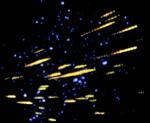 Meteors Now and Again
10.08.1998
The Perseid Meteor Shower, usually the best meteor shower of the year, will peak over the next two nights. Over the course of an hour, a person watching a clear sky from a dark location might see as many as 100 meteors.
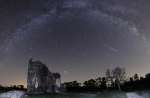 Perseid Prelude
12.08.2010
Each August, as planet Earth swings through dust trailing along the orbit of periodic comet Swift-Tuttle, skygazers can enjoy the Perseids Meteor Shower. The shower should build to its peak now, best seen from later tonight after moonset, until dawn tomorrow morning when Earth moves through the denser part of the wide dust trail.
|
January February March April May June July August September October |
|||||||||||||||||||||||||||||||||||||||||||||||||