
|
Keyword: Moon
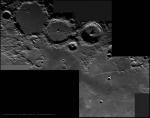 Ptolemaeus, Alphonsus and Arzachel
8.02.2007
These three ancient, large impact craters lie on the north eastern shores of Mare Nubium, the lunar Sea of Clouds. Along the top of the stark mosaic (left to right) are the namesakes of Ptolemaeus, Alphonsus and Arzachel.
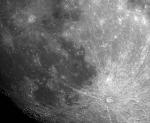 Tycho and Copernicus: Lunar Ray Craters
9.08.2001
Dazzling in binoculars or a small telescope, the Moon is pocked with impact craters. During partial lunar phases, the craters along the terminator are cast in dramatic relief by strong shadows. But when the Moon is full some craters seem to sprout systems of bright radial lines or rays.
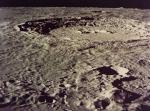 Crater Copernicus
13.05.2001
One of the more prominent craters on the Moon is named Copernicus. Copernicus is a large young crater visible with binoculars slightly northwest of the center of the Moon's Earth-facing hemisphere. Copernicus is distinguished by its size and by the many bright rays pointing out from it.
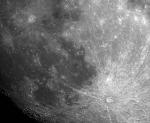 Tycho and Copernicus: Lunar Ray Craters
4.03.2005
Dazzling in binoculars or a small telescope, the Moon is pocked with impact craters. During partial lunar phases, the craters along the terminator are cast in dramatic relief by strong shadows. But when the Moon is full some craters seem to sprout systems of bright radial lines or rays.
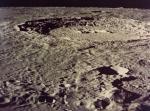 Crater Copernicus
9.09.1998
One of the more prominent craters on the Moon is named Copernicus. Copernicus is a large young crater visible with binoculars slightly northwest of the center of the Moon's Earth-facing hemisphere. Copernicus is distinguished by its size and by the many bright rays pointing out from it.
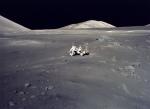 Apollo 17 Lunarscape: A Magnificent Desolation
8.11.2003
Buzz Aldrin, Apollo 11 Lunar Module pilot and the second human to walk on the Moon, described the lunar landscape as "a magnificent desolation". Dramatic pictures from the Apollo missions to the lunar surface testify to this apt turn of phrase.
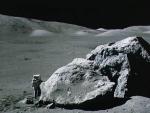 Apollo 17: Boulder on the Moon
5.09.1997
Twenty five years ago humans roamed the Moon. Pictured here during the last moon landing, scientist-astronaut Harrison Schmitt was photographed standing next to a huge, split boulder. Apollo 17 was one of six missions that landed humans on the moon and returned them safely.
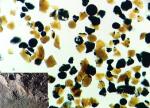 Strange Orange Soil on the Moon
23.05.2001
How did orange soil appear on the Moon? This mystery began when astronaut Harrison Schmidt noticed the off-color patch near Apollo 17's Taurus-Littrow landing site in 1972. Schmidt and fellow astronaut Eugene Cernan scooped up some of the unusual orange soil for detailed inspection back on Earth.
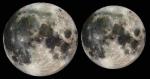 Perigee Moon, Apogee Moon
21.12.1999
Tonight, those blessed with clear skies can enjoy a glorious full moon, the last full moon of the "Y1.9K"s. In fact, tonight's moon will be a full-perigee-solstice moon, reaching its full phase and perigee (the closest point in its orbit) on the solstice, the first day of northern hemisphere winter.
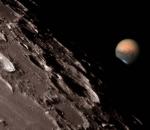 Mars at the Moon s Edge
24.07.2003
What was that bright "star" near the Moon last week? Mars of course, as the Red Planet wandered near the wanning gibbous Moon early last Thursday morning, passing behind the lunar orb when viewed from some locations in South and Central America, the Carribean, and Florida.
|
January February March April May June July August September October |
|||||||||||||||||||||||||||||||||||||||||||||||||