
|
Keyword: solstice
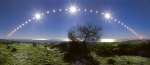 Tyrrhenian Sea and Solstice Sky
21.12.2007
Today the Solstice occurs at 0608 Universal Time, the Sun reaching its southernmost declination in planet Earth's sky. Of course, the December Solstice marks the beginning of winter in the northern hemisphere and summer in the south.
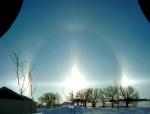 Sun Halo at Winter Solstice
13.01.2002
Sometimes it looks like the Sun is being viewed through a large lens. In the above case, however, there are actually millions of lenses: ice crystals. As water freezes in the upper atmosphere, small, flat, six-sided, ice crystals might be formed.
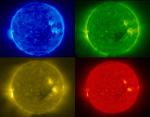 The View from Stereo Ahead
21.12.2006
On December 22nd, at 0022 Universal Time the Sun reached its southernmost point in Earth's sky marking the final season change for the year 2006. In celebration of the Solstice, consider these images of the Sun from an extreme ultraviolet telescope onboard the Stereo Ahead spacecraft.
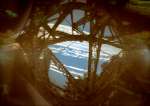 Solstice to Solstice Solargraph
26.06.2009
This six month long exposure compresses the time from solstice to solstice (~ December 21, 2008 to June 20, 2009) into a single point of view. Dubbed a solargraph, the unconventional picture was recorded with a pinhole camera made from an aluminum can lined with a piece of photographic paper.
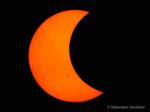 Solstice And Season's Eclipse
20.12.2000
Today the Sun reaches its southernmost point in planet Earth's sky at 13:37 UT. This celestial event is known as a solstice, marking the beginning of Summer in the Southern Hemisphere and Winter in the North.
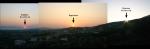 Sunrise by Season
20.12.2005
Does the Sun always rise in the same direction? No. As the seasons change, the direction toward the rising Sun will change, too. The Sun will always rise and set furthest to the south during the day of Winter Solstice, and furthest to the north during Summer Solstice.
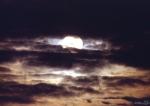 Partial Eclipse, Cloudy Day
20.12.2001
Welcome to the December Solstice, first day of winter in the north and summer in the southern hemisphere of planet Earth. Today the Sun reaches its southernmost declination in the sky at 19:21 Universal Time.
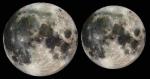 Perigee Moon, Apogee Moon
21.12.1999
Tonight, those blessed with clear skies can enjoy a glorious full moon, the last full moon of the "Y1.9K"s. In fact, tonight's moon will be a full-perigee-solstice moon, reaching its full phase and perigee (the closest point in its orbit) on the solstice, the first day of northern hemisphere winter.
 Zimbabwe Sunset
21.06.2002
Today's scheduled geocentric astronomical event is the Solstice, with the Sun reaching its northernmost declination at 13 hours 24 minutes Universal Time. For denizens of planet Earth this Solstice marks the begining of Summer in the northern hemisphere and Winter in the south.
 Solstice at Newgrange
19.12.2008
Tomorrow's solstice marks the southernmost point of the Sun's annual motion through planet Earth's sky and the astronomical beginning of winter in the north. In celebration of the northern winter solstice...
|
January February March April May June July August September October |
|||||||||||||||||||||||||||||||||||||||||||||||||