
|
You entered: Solar System
 AB Aurigae: How To Make Planets
8.02.2003
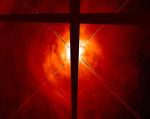
This enhanced Hubble Space Telescope image shows in remarkable detail the inner portion of the disk of dust and gas surrounding the star AB Aurigae. Knots of material, visible here for the first time...
 Neptune: Still Springtime After All These Years
13.06.2003
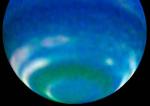
In the 1960s spring came to the southern hemisphere of Neptune, the Solar System's outermost gas giant planet. Of course, since Neptune orbits the Sun once every 165 earth-years, it's still spring for southern Neptune, where each season lasts over four decades.
 Asteroids Near Earth
1.10.2011
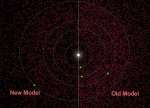
Though the sizes are not to scale, the Sun and planets of the inner solar system are shown in this illustration, where each red dot represents an asteroid. New results from NEOWISE, the infrared...
 A Message from Earth
3.05.2020
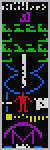
What are these Earthlings trying to tell us? The featured message was broadcast from Earth towards the globular star cluster M13 in 1974. During the dedication of the Arecibo Observatory - still one of the largest single radio telescopes in the world - a string of 1's and 0's representing the diagram was sent.
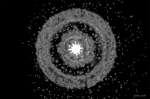 X Ray Rings Around a Gamma Ray Burst
17.10.2022
Why would x-ray rings appear around a gamma-ray burst? The surprising answer has little to do with the explosion itself but rather with light reflected off areas of dust-laden gas in our own Milky Way Galaxy.
 APOD: 2024 September 9 Б Mars: Moon, Craters, and Volcanos
9.09.2024
If you could fly over Mars, what might you see? The featured image shows exactly this in the form of a Mars Express vista captured over a particularly interesting region on Mars in July. The picture's most famous feature is Olympus Mons, the largest volcano in the Solar System, visible on the upper right.
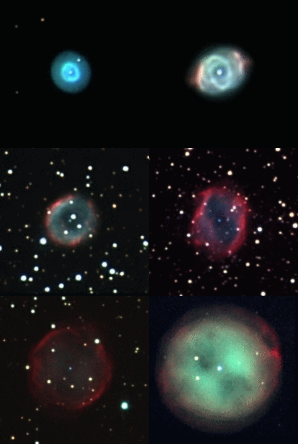 The Planetary Nebula Show
3.10.2001
What do the Owl, the Cat's Eye, the Ghost of Jupiter, and Saturn have in common? They're all planetary nebulae of course(!), glowing gaseous shrouds shed by dying sun-like stars as they run out of nuclear fuel.
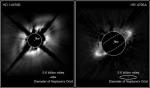 Possible Planets And Infrared Dust
20.01.1999
These near-infrared Hubble images of dust surrounding young stars offer the latest tantalizing evidence for planets beyond our Solar System. At left, the dark gap seen in the dust disk is reminiscent of a similar large gap in Saturn's rings believed to be sculpted by orbiting moons.
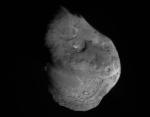 The Nucleus of Comet Tempel 1
15.09.2005
Approaching the nucleus of comet Tempel 1 at ten kilometers per second, the Deep Impact probe's targeting camera recorded a truly dramatic series of images. Successive pictures improve in resolution and have been...
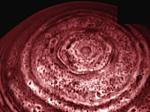 A Mysterious Hexagonal Cloud System on Saturn
3.04.2007
Why would clouds form a hexagon on Saturn? Nobody is yet sure. Originally discovered during the Voyager flybys of Saturn in the 1980s, nobody has ever seen anything like it anywhere else in the Solar System.
|
January February March April May June July August |
||||||||||||||||||||||||||||||||||||||||||||||||||||||||