
|
You entered: Earth orbit
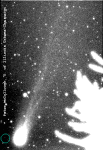 Comet Hyakutake Passes the Earth
25.03.1996
This picture of Comet Hyakutake taken the night of March 21/22 in Illinois, USA shows the enormous tail that has already developed. The silhouette on the right is a foreground tree, and the superposed green circle on the left shows the size of the full moon.
 Zarmina s World
1.10.2010
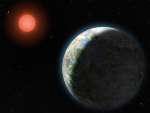
A mere 20 light-years away in the constellation Libra, red dwarf star Gliese 581 has received much scrutiny by astronomers in recent years. Earthbound telescopes had detected the signatures of multiple planets orbiting...
 A Jupiter Venus Conjunction
8.03.1999
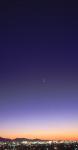
Venus and Jupiter appeared unusually close together in the sky last month. The conjunction was easily visible to the unaided eye because Venus appears brighter than any background star. The two planets were not significantly closer in space - Venus just passed nearly in front of Jupiter as seen from the Earth.
 Cities at Night
5.03.2016
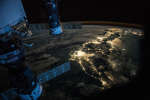
Looking toward the south from an altitude of 400 kilometers, this stunning snapshot from orbit finds bright lights of Tokyo and cities across central and southern Japan, planet Earth shining upward through broken clouds. The spacefaring perspective was captured last July by astronaut Scott Kelly during his stay on board the International Space Station.
 Five to Mars
2.05.2003
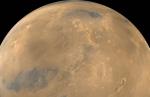
Come December 2003 - January 2004, an armada of five new invaders from Earth should arrive on the shores of the Red Planet -- the Japanese ( ISAS) Nozomi orbiter, the European Space Agency's Mars Express orbiter carrying the Beagle 2 lander, and NASA's own two Mars Exploration Rovers.
 Stereo Saturn
29.10.1997
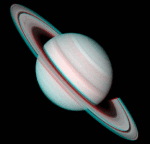
Get out your red/blue glasses and launch yourself into this stereo picture of Saturn! The picture is actually composed from two images recorded weeks apart by the Voyager 2 spacecraft during its visit to the Saturnian System in August of 1981.
 Stereo Saturn
7.09.2002
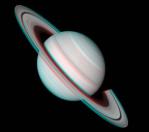
Get out your red/blue glasses and launch yourself into this stereo picture of Saturn! The picture is actually composed from two images recorded weeks apart by the Voyager 2 spacecraft during its visit to the Saturnian System in August of 1981.
 Stereo Saturn
12.02.2000
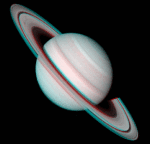
Get out your red/blue glasses and launch yourself into this stereo picture of Saturn! The picture is actually composed from two images recorded weeks apart by the Voyager 2 spacecraft during its visit to the Saturnian System in August of 1981.
 Stereo Saturn
30.01.1999
Get out your red/blue glasses and launch yourself into this stereo picture of Saturn! The picture is actually composed from two images recorded weeks apart by the Voyager 2 spacecraft during its visit to the Saturnian System in August of 1981.
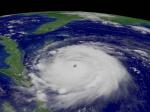 Hurricane Frances Approaches Florida
3.09.2004
A major hurricane is heading for Florida. Hurricane Frances, one of the stronger storm systems of modern times, may cross the eastern coast of Florida sometime tomorrow. Those in the path of a hurricane should take precautions. For example, NASA's Kennedy Space Center has completely shut down.
|
January February March April May June July August September October |
|||||||||||||||||||||||||||||||||||||||||||||||||