
|
You entered: time
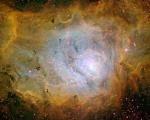 The Lagoon Nebula in Three Colors
20.08.2001
The bright Lagoon Nebula is home to a diverse array of astronomical objects. Particularly interesting sources include a bright open cluster of stars and several energetic star-forming regions. When viewed by eye, cluster light...
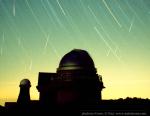 Leonids Over Korean Observatory
12.12.2001
There were two peaks to this year's Leonid Meteor Shower. The first peak was best seen during the early morning hours of November 18 in North America, while the second peak, almost twice the intensity of the first, occurred eight hours later and was best seen from Asia.
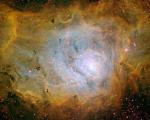 The Lagoon Nebula in Three Colors
6.10.2002
The bright Lagoon Nebula is home to a diverse array of astronomical objects. Particularly interesting sources include a bright open cluster of stars and several energetic star-forming regions. When viewed by eye, cluster light...
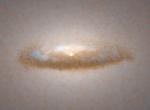 The Doomed Dust Disk of NGC 7052
22.06.1998
What created the dust disk in the center of NGC 7052, and what keeps it spinning? Although the disk might appear as a relatively tame "hubcap in space", the unusual center of elliptical galaxy NGC 7052 is probably the remnant of a titanic collision between galaxies.
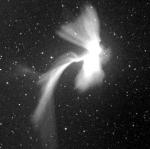 A Leonid Meteor Explodes
23.11.1998
Click on the above image and watch a Leonid meteor explode. The tremendous heat generated by the collision of a small sand-bit moving at 70 kilometers/second with the Earth's upper atmosphere causes the rock-fragment to heat up, glow brightly, and disintegrate.
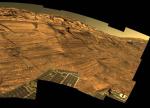 A Year of Mars Roving
31.12.2004
Landing on Mars in January, NASA's twin rovers Spirit and Opportunity have now each spent over 330 sols roving the martian surface. Still healthy and well in to extended missions, the golfcart sized robots have operated five times longer than planned.
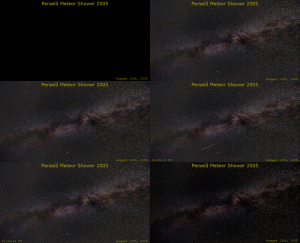 Perseid Meteors and the Milky Way
15.08.2005
Where will the next Perseid meteor appear? Sky enthusiasts who trekked outside for the Perseid meteor shower that peaked over the past few days typically had this question on their mind. The above movie, where the time-line has been digitally altered, captures part of that very mystery.
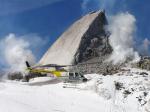 Rock Slab Growing at Mt St Helens Volcano
9.05.2006
A new rock slab is growing at more than one meter a day on the Mt. St. Helens volcano in Washington, USA. The rock slab, growing since last November, now extends about 100 meters out from one of the volcano's craters. A recently made time lapse movie shows the rock slab growing.
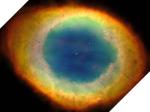 M57: The Ring Nebula
25.06.2006
It looked like a ring on the sky. Hundreds of years ago astronomers noticed a nebula with a most unusual shape. Now known as M57 or NGC 6720, the gas cloud became popularly known as the Ring Nebula.
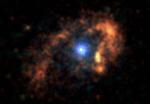 Eta Carinae in X Rays
11.10.1999
Eta Carinae is the one of the most luminous star systems in our Galaxy, radiating millions of times more power than our Sun. Eta Carinae is also one of the strangest star systems known, brightening and fading greatly since the early 1800s.
|
January February March April May June July August |
||||||||||||||||||||||||||||||||||||||||||||||||||||||||