
|
You entered: apollo
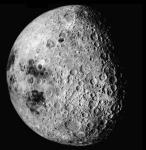 Far Side of the Moon
8.10.1998
Locked in synchronous rotation, the Moon always presents its well-known near side to Earth. But from lunar orbit, Apollo astronauts also grew to know the Moon's far side. This sharp picture from Apollo...
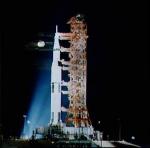 The Last Moon Shot
17.06.2000
In 1865 Jules Verne predicted the invention of a space capsule that could carry people. In his science fiction story "From the Earth to the Moon", he outlined his vision of a cannon in Florida so powerful that it could shoot a "Projectile-Vehicle" carrying three adventurers to the Moon.
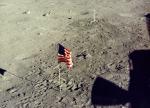 Footprints on Another World
20.07.2002
On July 20th, 1969, humans first set foot on the Moon. Taken from a window of their Apollo 11 lunar module, the Eagle, this picture shows the footprints in the powdery lunar soil made by astronauts Neil Armstrong and Buzz Aldrin.
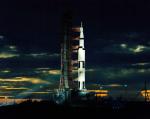 The Last Moon Shot
18.10.2003
In 1865 Jules Verne predicted the invention of a space capsule that could carry people. In his science fiction story "From the Earth to the Moon", he outlined his vision of a cannon in Florida so powerful that it could shoot a "Projectile-Vehicle" carrying three adventurers to the Moon.
 Standing on the Moon
1.02.1997
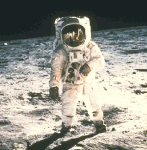
Humans once walked on the Moon. Pictured above is the second person to stand on the lunar surface: Edwin "Buzz" Aldrin. During this Apollo 11 mission, Neil Armstrong (the first person to walk on the moon) and Buzz Aldrin landed on the Moon while Michael Collins circled in the Command Module above.
 Astronaut Kicks Lunar Field Goal
1.04.1998
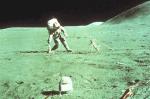
Score three points for NASA. With time running out late in Apollo 15's mission to the Moon in 1971, Astronaut David Scott prepared to "split the uprights" and bring about yet another dramatic end-of-the-mission win for NASA. Scott used a special "lunar football" designed for the rugged games held on the Moon.
 Lunar Dust and Duct Tape
9.11.2001
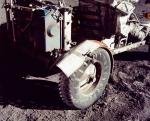
Why is the Moon dusty? On Earth, rocks are weathered by wind and water, creating soil and sand. On the Moon, the long history of micrometeorite bombardment has blasted away at the rocky surface creating a layer of powdery lunar soil or regolith. This lunar regolith could be a scientific and industrial bonanza.
 Standing on the Moon
3.05.1998
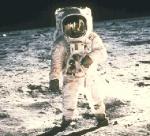
Humans once walked on the Moon. Pictured above is the second person to stand on the lunar surface: Edwin "Buzz" Aldrin. During this Apollo 11 mission, Neil Armstrong (the first person to walk on the moon) and Buzz Aldrin landed on the Moon while Michael Collins circled in the Command Module above.
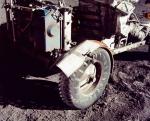 Lunar Dust and Duct Tape
17.04.2004
Why is the Moon dusty? On Earth, rocks are weathered by wind and water, creating soil and sand. On the Moon, the long history of micrometeorite bombardment has blasted away at the rocky surface creating a layer of powdery lunar soil or regolith. This lunar regolith could be a scientific and industrial bonanza.
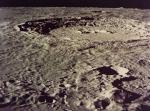 Crater Copernicus
13.05.2001
One of the more prominent craters on the Moon is named Copernicus. Copernicus is a large young crater visible with binoculars slightly northwest of the center of the Moon's Earth-facing hemisphere. Copernicus is distinguished by its size and by the many bright rays pointing out from it.
|
January February March April |
|||||||||||||||||||||||||||||||||||||||||||||||||