
|
You entered: Earth's moon
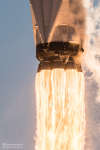 TESS Launch Close Up
21.04.2018
NASA's Transiting Exoplanet Survey Satellite (TESS) began its search for planets orbiting other stars by leaving planet Earth on April 18. The exoplanet hunter rode to orbit on top of a Falcon 9 rocket.
 The Eagle Rises
25.07.2009
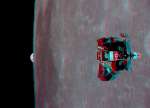
Get out your red/blue glasses and check out this remarkable stereo view from lunar orbit. Created from two photographs (AS11-44-6633, AS11-44-6634) taken by astronaut Michael Collins forty years ago during the 1969 Apollo...
 The Eagle Rises
13.07.2019
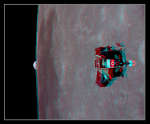
Get out your red/blue glasses and check out this stereo view from lunar orbit. The 3D anaglyph was created from two photographs (AS11-44-6633, AS11-44-6634) taken by astronaut Michael Collins during the 1969 Apollo 11 mission.
 The Eagle Rises
30.07.2022
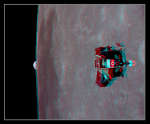
Get out your red/blue glasses and check out this stereo view from lunar orbit. The 3D anaglyph was created from two photographs (AS11-44-6633, AS11-44-6634) taken by astronaut Michael Collins during the 1969 Apollo 11 mission.
 The Eagle Rises
10.08.2008
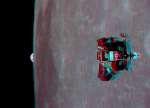
Get out your red/blue glasses and check out this remarkable stereo view from lunar orbit. Created from two photographs (AS11-44-6633, AS11-44-6634) taken by astronaut Michael Collins during the 1969 Apollo 11 mission, the 3D anaglyph features the lunar module ascent stage, dubbed The Eagle, as it rises to meet the command module in lunar orbit.
 Apollo 17: The Crescent Earth
29.04.2021
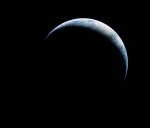
Our fair planet sports a curved, sunlit crescent against the black backdrop of space in this stunning photograph. From the unfamiliar perspective, the Earth is small and, like a telescopic image of a distant planet, the entire horizon is completely within the field of view.
 The Eagle Rises
21.07.2012
Get out your red/blue glasses and check out this remarkable stereo view from lunar orbit. Created from two photographs (AS11-44-6633, AS11-44-6634) taken by astronaut Michael Collins during the 1969 Apollo 11 mission...
 Partial Eclipse over Beijing
11.01.2019
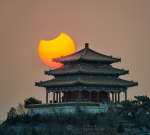
On January 6 the New Moon rose in silhouette with the Sun seen from northeastern Asia. Near maximum, the dramatic partial solar eclipse is captured in this telephoto view through hazy skies. In the foreground, the hill top Wanchun pavilion overlooking central Beijing's popular Forbidden City hosts eclipse-watching early morning risers.
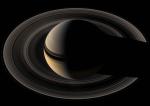 Crescent Saturn
23.10.2007
Saturn never shows a crescent phase -- from Earth. But when viewed from beyond, the majestic giant planet can show an unfamiliar diminutive sliver. This image of crescent Saturn in natural color was taken by the robotic Cassini spacecraft in May.
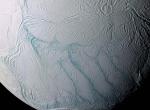 Enceladus and the Search for Water
10.03.2006
Based on data from Cassini spacecraft instruments, researchers are now arguing that liquid water reservoirs exist only tens of meters below the surface of Saturn's small (500 kilometer diameter) but active moon Enceladus. The exciting new results center around towering jets and plumes of material erupting from the moon's surface.
|
January February March April May June July August September |
|||||||||||||||||||||||||||||||||||||||||||||||||