
|
You entered: Earth's moon
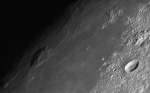 Mons Rumker in the Ocean of Storms
5.12.2020
Mons Rumker, a 70 kilometer wide complex of volcanic domes, rises some 1100 meters above the vast, smooth lunar mare known as Oceanus Procellarum, the Ocean of Storms. Daylight came to the area late last month.
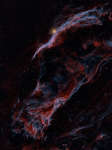 Along the Western Veil
19.09.2019
Delicate in appearance, these filaments of shocked, glowing gas, are draped across planet Earth's sky toward the constellation of Cygnus. They form the western part of the Veil Nebula. The Veil Nebula itself is a large supernova remnant, an expanding cloud born of the death explosion of a massive star.
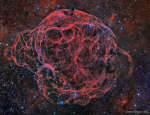 Simeis 147: Supernova Remnant
18.05.2017
It's easy to get lost following intricate filaments in this detailed image of faint supernova remnant Simeis 147. Also cataloged as Sharpless 2-240 it goes by the popular nickname, the Spaghetti Nebula. Seen toward the boundary of the constellations Taurus and Auriga, it covers nearly 3 degrees or 6 full moons on the sky.
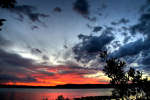 Smile in the Sky
5.12.2008
At sunset, Monday's western sky showed off stunning colors and dramatic clouds reflected in Brisbane Water on the Central Coast of New South Wales, Australia. It also featured the remarkable conjunction of the crescent Moon, Venus, and Jupiter forming a twilight smiley face.
 Milky Way in Moonlight
23.04.2016
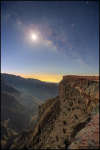
A waning crescent moon, early morning twilight, and Al Hamra's city lights on the horizon can't hide the central Milky Way in this skyscape from planet Earth. Captured in a single exposure...
 Simeis 147: Supernova Remnant
21.11.2019
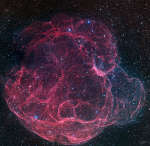
It's easy to get lost following the intricate looping filaments in this detailed image of supernova remnant Simeis 147. Also cataloged as Sharpless 2-240 it goes by the popular nickname, the Spaghetti Nebula.
 Simeis 147: Supernova Remnant
10.12.2020
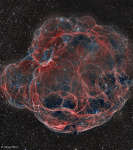
It's easy to get lost following the intricate looping filaments in this detailed image of supernova remnant Simeis 147. Also cataloged as Sharpless 2-240 it goes by the popular nickname, the Spaghetti Nebula.
 Supernova Remnant Simeis 147
13.01.2022
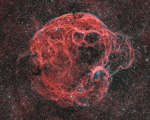
It's easy to get lost following the intricate, looping, twisting filaments in this detailed image of supernova remnant Simeis 147. Also cataloged as Sharpless 2-240 it goes by the popular nickname, the Spaghetti Nebula.
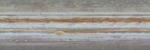 Jupiter Unpeeled
15.02.2001
Slice Jupiter from pole to pole, peel back its outer layers of clouds, stretch them onto a flat surface ... and for all your trouble you'd end up with something that looks a lot like this. Scrolling right will reveal the full picture, a color mosaic of Jupiter from the Cassini spacecraft.
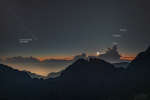 APOD: 2026 April 18 Б PanSTARRS and Planets
18.04.2026
Near the eastern horizon before sunrise, Comet C/2025 R3 PanSTARRS is getting brighter. Readily visible in binoculars and small telescopes, the comet may be just on the verge of naked-eye visibility from dark sky sites.
|
January February March April May June July August September |
|||||||||||||||||||||||||||||||||||||||||||||||||