
|
You entered: cluster
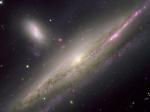 NGC 1531/2: Interacting Galaxies
1.03.2005
This dramatic image of an interacting pair of galaxies was made using 8-meter Gemini South telescope at Cerro Pachon, Chile. NGC 1531 is the background galaxy with a bright core just above center and NGC 1532 is the foreground spiral galaxy laced with dust lanes.
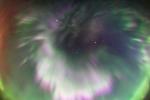 Northern Lights, September Skies
16.09.2005
So far, the Aurora Borealis or Northern Lights have made some remarkable visits to September's skies. The reason, of course, is the not-so-quiet Sun. In particular, a large solar active region now crossing...
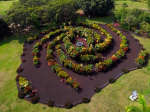 Kona Galaxy Garden
18.01.2011
How does your galaxy grow? Quite contrary to a typical galaxy, this one needs water to flourish. Pictured above as it appears at the Paleaku Peace Gardens Sanctuary in Kona, Hawaii, USA, a meticulously planned garden spanning about 30 meters provides a relatively accurate map of our Milky Way Galaxy.
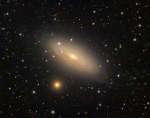 Spiral Galaxy NGC 2841
3.03.2022
A mere 46 million light-years distant, spiral galaxy NGC 2841 can be found in the northern constellation of Ursa Major. This deep view of the gorgeous island universe was captured during 32 clear nights in November, December 2021 and January 2022. It shows off a striking yellow nucleus, galactic disk, and faint outer regions.
 Long Leonid
24.11.2000
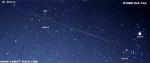
Just last week this long lovely Leonid shower meteor arced through the night. Captured on November 17/18 by photographer Bob Yen, the meteor trail spans about 70 times the apparent diameter of the full moon in the skies above Mt. Wilson, California, USA. The Leonid's path flashes from
 Spiral Galaxy NGC 1232
30.09.1998
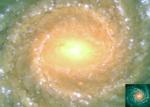
Galaxies are fascinating not only for what is visible, but for what is invisible. Grand spiral galaxy NGC 1232, recently captured in detail by the new Very Large Telescope, is a good example.
 NGC 1309 and Friends
9.02.2006
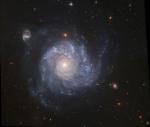
A gorgeous spiral galaxy some 100 million light-years distant, NGC 1309 lies on the banks of the constellation Eridanus. NGC 1309 spans about 30,000 light-years, one third the size of our larger Milky Way galaxy.
 In the Vicinity of the Cone Nebula
23.11.2008
Strange shapes and textures can be found in neighborhood of the Cone Nebula. The unusual shapes originate from fine interstellar dust reacting in complex ways with the energetic light and hot gas being expelled by the young stars.
 Ultraviolet Andromeda
17.09.2009
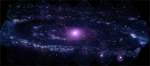
Taken by a telescope onboard NASA's Swift satellite, this stunning vista represents the highest resolution image ever made of the Andromeda Galaxy (aka M31) - at ultraviolet wavelengths. The mosaic is composed of 330 individual images covering a region 200,000 light-years wide.
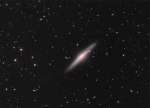 NGC 2683: Edge On Spiral Galaxy
17.03.2012
This elegant island universe is cataloged as NGC 2683. It lies a mere 16 million light-years distant toward the northern constellation Lynx. A spiral galaxy comparable to our own Milky Way, NGC 2683 is seen nearly edge-on in the cosmic vista.
|
January February March April May June July August September October |
|||||||||||||||||||||||||||||||||||||||||||||||||