
|
You entered: comet
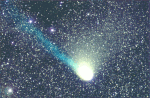 Comet Hale-Bopp Develops a Tail
12.02.1997
Comet Hale-Bopp has quite a tail to tell already. This remarkable comet was first discovered in 1995, even before Comet Hyakutake. Since then, this erupting snowball continues to fall into our inner Solar System and is starting to put on quite a show.
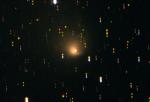 Comet Hale Bopp in the Outer Solar System
26.03.2001
Whatever became of Comet Hale-Bopp? The brightest comet in recent years has continued into the outer Solar System and is now further from the Sun than Saturn. To the surprise of many, Comet Hale-Bopp is still active, continuing to spew gas, ice and dust particles out into space.
 APOD: 2025 January 21 Б Comet ATLAS over Brasilia
21.01.2025
What's that in the sky? Above the city, above most clouds, far in the distance: it's a comet. Pictured, the impressive tail of Comet C/2024 G3 (ATLAS) was imaged from Brasцlia, Brazil four days ago.
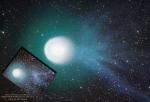 A Tale of Comet Holmes
10.11.2007
A beautiful blue ion tail has become visible in deep telescopic images of Comet Holmes. Pointing generally away from the Sun and also planet Earth, the comet's ion tail is seriously foreshortened by our extreme viewing angle.
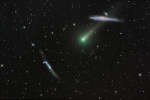 Comet Leonard and the Whale Galaxy
3.12.2021
Sweeping through northern predawn skies, on November 24 Comet Leonard (C/2021 A1) was caught between two galaxies in this composite telescopic image. Sporting a greenish coma the comet's dusty tail seems to harpoon the heart of NGC 4631 (top) also known as the Whale Galaxy.
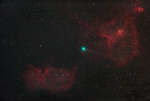 Comet Jacques, Heart and Soul
22.08.2014
On July 13th, a good place to watch Comet Jacques was from Venus. Then, the recently discovered visitor (C/2014 E2) to the inner solar system passed within about 14.5 million kilometers of our sister planet.
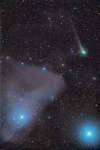 Stardust and Comet Tails
20.08.2022
Heading for its closest approach to the Sun, or perihelion, on December 19 comet C/2017 K2 (PanSTARRS) remains a sight for telescopic observers as it sweeps through planet Earth's skies in the constellation Scorpius.
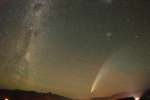 Comet McNaught Over New Zealand
19.10.2014
Comet McNaught was perhaps the most photogenic comet of modern times -- from Earth. After making quite a show in the northern hemisphere in early January of 2007, the comet moved south and developed a long and unusual dust tail that dazzled southern hemisphere observers.
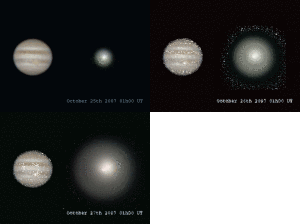 Comet Holmes Coma Expands
30.10.2007
Go outside tonight and see Comet Holmes. No binoculars or telescopes are needed -- just curiosity and a sky map. Last week, Comet 17P/Holmes underwent an unusual outburst that vaulted it unexpectedly from obscurity into one of the brightest comets in recent years.
 Comet NEAT in Southern Skies
6.03.2003
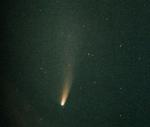
After last month's dramatic swoop past the Sun, Comet NEAT (C/2002 V1) appeared as a naked-eye comet, emerging from the evening twilight in planet Earth's southern skies. On March 1st, New Zealand...
|
January February March April May June July August September October |
|||||||||||||||||||||||||||||||||||||||||||||||||