
|
You entered: life
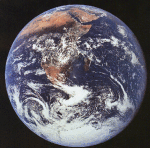 Welcome to Planet Earth
4.02.2001
Welcome to Planet Earth, the third planet from a star named the Sun. The Earth is shaped like a sphere and composed mostly of rock. Over 70 percent of the Earth's surface is water. The planet has a relatively thin atmosphere composed mostly of nitrogen and oxygen.
 APOD: 2024 July 31 Б Leopard Spots on Martian Rocks
31.07.2024
What is creating these unusual spots? Light-colored spots on Martian rocks, each surrounded by a dark border, were discovered earlier this month by NASA's Perseverance Rover currently exploring Mars. Dubbed leopard spots because...
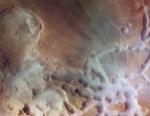 Colorful Water Clouds Over Mars
17.04.2001
One place where water can be found on Mars is in clouds. In the above picture colorful water clouds are visible just after sunrise in and around a maze of canyons known as Noctis Labyrinthus (the labyrinth of the night).
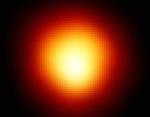 Betelgeuse
19.04.1998
Here is the first direct picture of the surface of a star other than our Sun. Taken by the Hubble Space Telescope in 1995, the atmosphere of Betelgeuse reveals some unexpected features, including a large bright hotspot visible below the center.
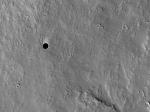 A Hole in Mars
28.05.2007
Black spots have been discovered on Mars that are so dark that nothing inside can be seen. Quite possibly, the spots are entrances to deep underground caves capable of protecting Martian life, where it to exist. The unusual hole pictured above was found on the slopes of the giant Martian volcano Arsia Mons.
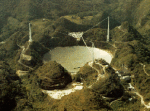 Arecibo: The Largest Telescope
12.04.1997
The Arecibo radio telescope is currently the largest single-dish telescope in the world. First opening in 1963, this 305 meter (1000 foot) radio telescope resides in a natural valley of Puerto Rico. The Arecibo telescope has been used for many astronomical research projects, including
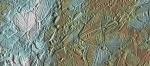 Europa's Disconnected Surface
2.01.1998
Jupiter's moon Europa is so exciting that the Galileo spacecraft orbiting Jupiter has now embarked on an extended mission to study it. Oceans that might exist beneath Europa's surface are thought to be one of the best places to look for life in our Solar System.
 Our Story in One Minute
14.11.2012
Could you tell the story of human existence in a minute? This thrilling video culls together multiple teasing snippets in an attempt to do just that. And sets it to music. Briefly depicted, from...
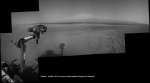 Curiosity on Mars: Mt Sharp in View
27.08.2012
What's that on the horizon? The light peak is Mt. Sharp -- an eventual destination of the Curiosity rover. The above image mosaic was taken from Bradbury Landing, the landing spot of Curiosity, and shows in the foreground the rover's extended robotic arm.
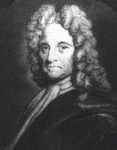 Edmund Halley's Greatest Discoveries
6.07.1996
Sir Edmond Halley was quite a discoverer. Born in 1656, he computed in 1705 that a bright comet was periodic and would make another appearance in 1758. The comet appeared as predicted and is now known as Comet Halley. Unfortunately, Halley died in 1742 and never saw his prediction come true.
|
January February March April May June July August September October |
|||||||||||||||||||||||||||||||||||||||||||||||||