
|
You entered: neutron star
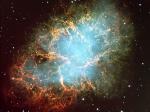 The Crab Nebula from VLT
25.03.2001
The Crab Nebula, filled with mysterious filaments, is the result of a star that was seen to explode in 1054 AD. This spectacular supernova explosion was recorded by Chinese and (quite probably) Anasazi Indian astronomers.
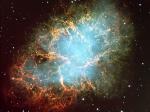 The Crab Nebula from VLT
14.07.2002
The Crab Nebula, filled with mysterious filaments, is the result of a star that was seen to explode in 1054 AD. This spectacular supernova explosion was recorded by Chinese and (quite probably) Anasazi Indian astronomers.
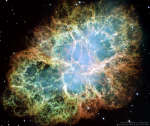 APOD: 2023 January 15 Б M1: The Crab Nebula from Hubble
15.01.2023
This is the mess that is left when a star explodes. The Crab Nebula, the result of a supernova seen in 1054 AD, is filled with mysterious filaments. The filaments are not only tremendously...
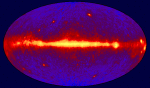 The Gamma Ray Sky
21.03.1998
What if you could "see" gamma rays? If you could, the sky would seem to be filled with a shimmering high-energy glow from the most exotic and mysterious objects in the Universe.
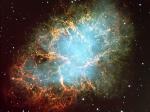 The Crab Nebula from VLT
22.11.1999
The Crab Nebula, filled with mysterious filaments, is the result of a star that was seen to explode in 1054 AD. This spectacular supernova explosion was recorded by Chinese and (quite probably) Anasazi Indian astronomers.
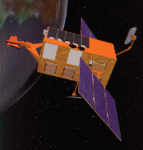 The X-ray Timing Explorer
3.01.1996
Launched Saturday on a Delta rocket, the X-ray Timing Explorer (XTE) will watch the sky for rapid changes in X-rays. XTE carries three separate X-ray telescopes. The Proportional Counter Array (PCA) and the High Energy X-ray Timing Experiment (HEXTE) will provide the best timing information in the widest X-ray energy range yet available.
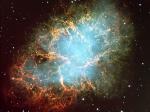 The Crab Nebula from VLT
14.09.2003
The Crab Nebula, filled with mysterious filaments, is the result of a star that was seen to explode in 1054 AD. This spectacular supernova explosion was recorded by Chinese and (quite probably) Anasazi Indian astronomers.
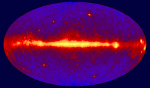 The Gamma Ray Sky
22.02.1997
What if you could "see" gamma rays? If you could, the sky would seem to be filled with a shimmering high-energy glow from the most exotic and mysterious objects in the Universe.
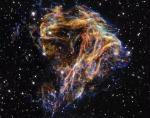 N49 s Cosmic Blast
4.07.2003
Scattered debris from a cosmic supernova explosion lights up the sky in this gorgeous composited image based on data from the Hubble Space Telescope. Cataloged as N49, these glowing filaments of shocked gas span about 30 light-years in our neighboring galaxy, the Large Magellanic Cloud.
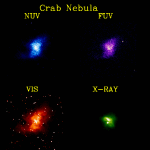 The High Energy Crab Nebula
9.09.1996
This is the mess that is left when a star explodes. The Crab Nebula is so energetic that it glows in every kind of light known. Shown above are images of the Crab Nebula from visible light to the X-ray band.
|
January February March April May June July August September October |
|||||||||||||||||||||||||||||||||||||||||||||||||