
|
You entered: sky
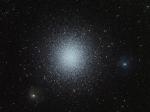 M13: The Great Globular Cluster in Hercules
11.05.2004
M13 is one of the most prominent and best known globular clusters. Visible with binoculars in the constellation of Hercules, M13 is frequently one of the first objects found by curious sky gazers seeking celestials wonders beyond normal human vision.
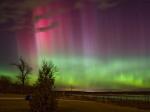 Aurora Over Iowa
18.12.2006
Last Thursday evening, stars were not the only lights in Iowa skies. Spectacular northern lights also shone from the heavens, extending across the midwestern USA and other locations not often graced with auroral displays.
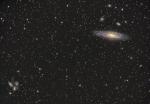 Galaxies in Pegasus
24.11.2007
This wide, sharp telescopic view reveals galaxies scattered beyond the stars near the northern boundary of the high-flying constellation Pegasus. Prominent at the upper right is NGC 7331. A mere 50 million light-years away, the large spiral is one of the brighter galaxies not included in Charles Messier's famous 18th century catalog.
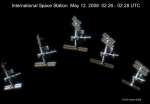 Space Station in the Sun
24.05.2008
Still bathed in sunlight, the International Space Station tracked through night skies above Hombressen, Germany on May 12. From a range of at least 360 kilometers, astronomer Dirk Ewers was able to record...
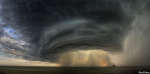 A Supercell Thunderstorm Cloud Over Montana
5.05.2013
Is that a spaceship or a cloud? Although it may seem like an alien mothership, it's actually a impressive thunderstorm cloud called a supercell. Such colossal storm systems center on mesocyclones -- rotating updrafts that can span several kilometers and deliver torrential rain and high winds including tornadoes.
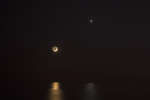 Reflections of Venus and Moon
19.05.2018
Posing near the western horizon, a brilliant evening star and slender young crescent shared reflections in a calm sea last Thursday after sunset. Recorded in this snapshot from the Atlantic beach at Santa Marinella...
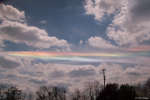 A Circumhorizontal Arc Over Ohio
19.05.2019
Why would clouds appear to be different colors? The reason here is that ice crystals in distant cirrus clouds are acting like little floating prisms. Sometimes known as a fire rainbow for its flame-like appearance, a circumhorizon arc lies parallel to the horizon.
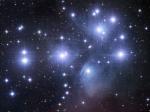 M45: The Pleiades Star Cluster
9.01.2006
Perhaps the most famous star cluster on the sky, the Pleiades can be seen without binoculars from even the depths of a light-polluted city. Also known as the Seven Sisters and M45, the Pleiades is one of the brightest and closest open clusters.
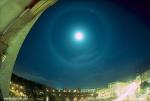 A Halo Around the Moon
15.05.2000
Have you ever seen a halo around the Moon? This fairly common sight occurs when high thin clouds containing millions of tiny ice crystals cover much of the sky. Each ice crystal acts like a miniature lens.
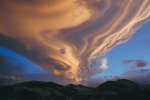 A Lenticular Cloud Over New Zealand
21.01.2009
What's happening above those mountains? Several clouds are stacked up into one striking lenticular cloud. Normally, air moves much more horizontally than it does vertically. Sometimes, however, such as when wind comes off of a mountain or a hill, relatively strong vertical oscillations take place as the air stabilizes.
|
January February March April May June July August September October |
|||||||||||||||||||||||||||||||||||||||||||||||||