
|
You entered: Earth orbit
 APOD: 2024 November 10 Б Valles Marineris: The Grand Canyon of Mars
10.11.2024
The largest canyon in the Solar System cuts a wide swath across the face of Mars. Named Valles Marineris, the grand valley extends over 3,000 kilometers long, spans as much as 600 kilometers across, and delves as much as 8 kilometers deep.
 Valles Marineris: The Grand Canyon of Mars
11.05.2014
The largest canyon in the Solar System cuts a wide swath across the face of Mars. Named Valles Marineris, the grand valley extends over 3,000 kilometers long, spans as much as 600 kilometers across, and delves as much as 8 kilometers deep.
 A Solar Ballet
15.01.2013
Sometimes, the Sun itself seems to dance. On just this past New Year's Eve, for example, NASA's Sun-orbiting Solar Dynamic Observatory spacecraft imaged an impressive prominence erupting from the Sun's surface. The dramatic explosion was captured in ultraviolet light in the above time lapse video covering four hours.
 Cooling Neutron Star
5.03.2011
Supernova remnant Cassiopeia A (Cass A) is a comfortable 11,000 light-years away. Light from the Cass A supernova, the death explosion of a massive star, first reached Earth just 330 years ago.
 Valles Marineris: The Grand Canyon of Mars
27.08.2002
The largest canyon in the Solar System cuts a wide swath across the face of Mars. Named Valles Marineris, the grand valley extends over 3,000 kilometers long, spans as much as 600 kilometers across, and delves as much as 8 kilometers deep.
 Valles Marineris: The Grand Canyon of Mars
24.08.2003
The largest canyon in the Solar System cuts a wide swath across the face of Mars. Named Valles Marineris, the grand valley extends over 3,000 kilometers long, spans as much as 600 kilometers across, and delves as much as 8 kilometers deep.
 Valles Marineris: The Grand Canyon of Mars
30.07.2006
The largest canyon in the Solar System cuts a wide swath across the face of Mars. Named Valles Marineris, the grand valley extends over 3,000 kilometers long, spans as much as 600 kilometers across, and delves as much as 8 kilometers deep.
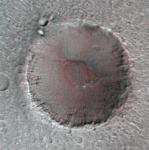 Mars: Big Crater in Stereo
30.04.1998
Get out your red/blue glasses and check out this stereo picture of "Big Crater" on Mars! (Pieces of red and blue or green clear plastic will do. Your right eye should look through...
 APOD: 2025 February 2 Б Comet G3 ATLAS Disintegrates
2.02.2025
What's happening to Comet G3 ATLAS? After passing near the Sun in mid-January, the head of the comet has become dimmer and dimmer. By late January, Comet C/2024 G3 (ATLAS) had become a headless wonder -- even though it continued to show impressive tails after sunset in the skies of Earth's Southern Hemisphere.
 Three Tails of Comet NEOWISE
8.03.2021
What created the unusual red tail in Comet NEOWISE? Sodium. A spectacular sight back in the summer of 2020, Comet NEOWISE, at times, displayed something more than just a surprisingly striated white dust tail and a pleasingly patchy blue ion tail.
|
January February March April May June July August September October |
|||||||||||||||||||||||||||||||||||||||||||||||||