
|
You entered: Moon
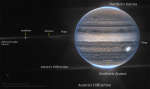 Jupiter from the Webb Space Telescope
30.08.2022
This new view of Jupiter is illuminating. High-resolution infrared images of Jupiter from the new James Webb Space Telescope (Webb) reveal, for example, previously unknown differences between high-floating bright clouds -- including the Great Red Spot -- and low-lying dark clouds.
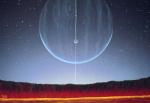
 Orion and the Ocean of Storms
13.12.2025
On December 5, 2022, a camera on board the uncrewed Orion spacecraft captured this view as Orion approached its return powered flyby of the Moon. Beyond one of Orion's extended solar arrays lies dark, smooth, terrain along the western edge of the Oceanus Procellarum.
 A Year of Assessing Astronomical Hazards
31.12.2002
Could an asteroid destroy civilization on Earth? Mountain-sized space rocks could potentially impact the Earth causing global effects, and perhaps even be mistaken for a nuclear blast of terrestrial origin. Such large impacts are rare but have happened before. Modern telescopes have therefore begun to scan the skies for signs of approaching celestial hazards.
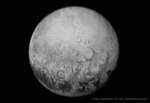 Last Look at Plutos Charon Side
13.07.2015
Pluto surface is strange. As the robotic New Horizons barrels toward its closest approach to Pluto and its moons tomorrow, images already coming back show Pluto's surface to be curiouser and curiouser. The featured image, taken two days ago, shows the side of Pluto that always faces Pluto's largest moon Charon.
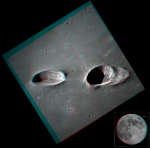 APOD: 2026 May 9 Б Messier Craters in Stereo
9.05.2026
Many bright nebulae and star clusters in planet Earth's sky are associated with the name of astronomer Charles Messier from his famous 18th century catalog. His name is also given to these two large and remarkable craters on the Moon.
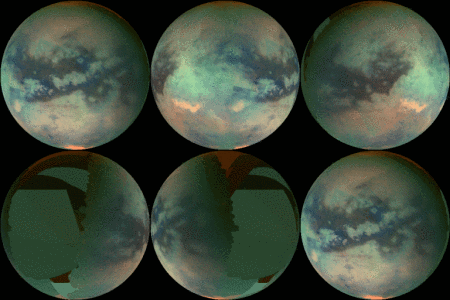 Rotating Titan in Infrared Light
15.02.2006
Titan is one of the strangest places in our Solar System. The only moon known with thick clouds, this unusual satellite of Saturn shows evidence of evaporating lakes created by methane rain. The clouds...
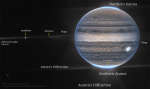 APOD: 2026 January 18 Б Jupiter from the Webb Space Telescope
18.01.2026
This infrared view of Jupiter by Webb is illuminating. High-resolution infrared images of Jupiter from the James Webb Space Telescope (Webb) reveal, for example, differences between high-floating bright clouds -- including the Great Red Spot -- and low-lying dark clouds.
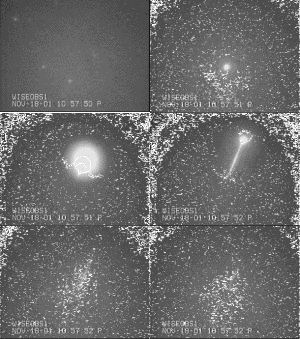 A Meteor Shower Fireball Movie
12.08.2005
Go outside tonight and see a celestial light show -- the later the better. Tonight is the peak of the month-long Perseid Meteor Shower. Although visible every year at this time, the Perseids are expected to appear particularly active this year due to the relative absence of glare from the Moon during the peak.
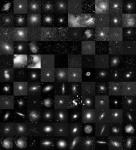 Messier Marathon
11.03.2000
Gripped by an astronomical spring fever, it's once again time for many amateur stargazers to embark on a Messier Marathon! The Vernal Equinox occurs March 20, marking the first day of Spring for the Northern Hemisphere.
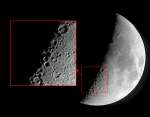 The Lunar X
10.12.2016
The striking X appearing in this lunarscape is easily visible in binoculars or a small telescope. Yet, not too many have seen it. The catch is this lunar X is fleeting, only apparent in the hours before the Moon's first quarter phase.
|
January February March April May June July August September October |
|||||||||||||||||||||||||||||||||||||||||||||||||