
|
You entered: astronomer
 Pick a Galaxy Any Galaxy
17.01.2002
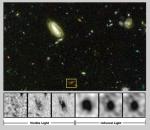
Pick a galaxy, any galaxy. In the top panel you can choose from a myriad of distant galaxies revealed in a deep Hubble Space Telescope image of a narrow slice of the cosmos toward the constellation Hercules.
 Saturn: Lord of the Rings
15.02.2002
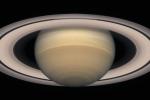
Born on today's date in 1564, Galileo used a telescope to explore the Solar System. In 1610, he became the first to be amazed by Saturn's rings. After nearly 400 years, Saturn's magnificent rings still offer one of the most stunning astronomical sights.
 APOD: 2025 October 10 Б 50 Light-years to 51 Pegasi
10.10.2025
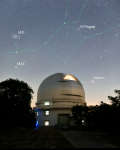
It's only 50 light-years to 51 Pegasi. That star's position is indicated in this snapshot from August 2025, taken on a night with mostly brighter stars visible above the dome at Observatoire de Haute-Provence in France.
 Short Gamma Ray Bursts Localized
17.10.2005
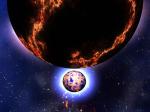
What causes gamma-ray bursts? The most energetic type of explosions known in the cosmos has been an enigma since discovered over 30 years ago. It now appears that there may not be one unique type of progenitor.
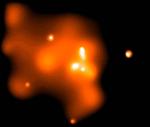 X-Rays From The Galactic Center
20.01.2000
Exploring quasars and active galaxies in the distant universe, astronomers have come to believe that most galaxies have massive black holes at their centers. Swirling stars and a strong, variable radio source offer convincing evidence that even our own Milky Way galaxy's center harbors such a bizarre object, a mere 30,000 light-years away.
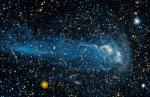 The Tail of a Wonderful Star
17.08.2007
To seventeenth century astronomers, Omicron Ceti or Mira was known as a wonderful star, a star whose brightness could change dramatically in the course of about 11 months. Mira is now seen as the archetype of an entire class of long-period variable stars.
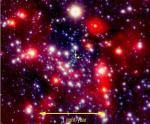 At the Center of the Milk Way
23.10.2005
At the center of our Milky Way Galaxy lies a black hole with over 2 million times the mass of the Sun. Once a controversial claim, this astounding conclusion is now virtually inescapable and based on observations of stars orbiting very near the galactic center.
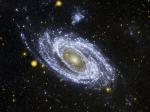 Bright Spiral Galaxy M81 in Ultraviolet from Galex
15.05.2007
Where are the hot stars in M81, one of the closest major spiral galaxies? To help find out, astronomers took a deep image in ultraviolet light of the sprawling spiral with the Earth-orbiting Galex telescope.
 New Shocks For Supernova 1987A
17.02.2000
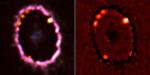
In February of 1987, astronomers witnessed the brightest supernova of modern times - supernova 1987A in the Large Magellanic Cloud. Mysterious rings of material surrounding the expanding stellar debris were soon emitting a visible glow excited by intense light from the explosion.
 Sutter s Mill Meteorite
28.04.2012
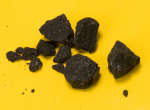
Last Sunday's bright fireball meteor falling through skies over California and Nevada produced sonic booms over a broad area around 7:21 am. Estimates indicate the meteor was about the size of a minivan.
|
January February March April May June July August |
||||||||||||||||||||||||||||||||||||||||||||||||||||||||