
|
You entered: Earth orbit
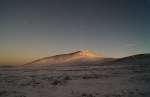 The Snows of Paranal
11.08.2011
Recorded last week, this dawn portrait of snowy mountain and starry sky captures a very rare scenario. The view does feature a pristine sky above the 2,600 meter high mountain Cerro Paranal, but clear skies over Paranal are not at all unusual.
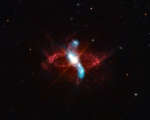 Symbiotic R Aquarii
28.06.2017
A long recognized naked-eye variable star, R Aquarii is actually an interacting binary star system, two stars that seem to have a close, symbiotic relationship. About 710 light years away, it consists of a cool red giant star and hot, dense white dwarf star in mutual orbit around their common center of mass.
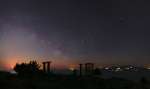 Take a Picture of Saturn
19.07.2013
Take a picture of Saturn in the sky tonight. You could capture a view like this one. Recorded just last month looking toward the south, planet Earth and ruins of the ancient temple of Athena at Assos, Turkey are in the foreground.
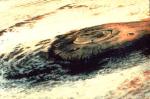 Olympus Mons on Mars: The Largest Volcano
15.09.1997
The largest volcano in the Solar System is on Mars. Olympus Mons rises 24 kilometers high and measures 550 km across. By comparison, Earth's largest volcano, Mauna Loa in Hawaii, rises 9 km high and measures 120 km across.
 Rigel Wide
6.04.2023
Brilliant, blue, supergiant star Rigel marks the foot of Orion the Hunter in planet Earth's night. Designated Beta Orionis, it's at the center of this remarkably deep and wide field of view.
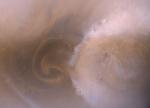 A Polar Martian Dust Storm
9.10.2000
On August 29, a large dust storm was photographed erupting out from the north polar cap of Mars. Such dust storms are not uncommon as summer advances in the north. In the above picture...
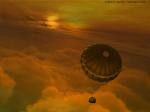 Titan Disguised
20.12.2004
Will the Huygens probe land or splash down? In the next few days, the Cassini spacecraft currently orbiting Saturn will release a probe that will descend toward Saturn's largest moon in mid-January. That moon, Titan, has a surface normally hidden from view by thick methane cloud decks.
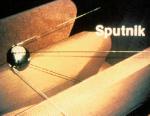 Sputnik: Traveling Companion
27.04.1997
Sputnik means "traveling companion". Despite the innocuous sounding name, the launch of the Earth's first "artificial moon", Sputnik 1, by the Soviets on October 4, 1957 shocked the free world, setting in motion events which resulted in the creation of NASA and the race to the Moon.
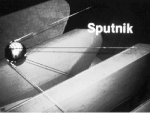 Sputnik: The Traveling Companion
10.02.1996
Sputnik means "traveling companion". In stark contrast to this innocent sounding name, the launch of the Earth's first "artificial moon", Sputnik 1, by the Soviets on October 4, 1957 shocked the free world, setting in motion events which resulted in the creation of NASA and the race to the Moon.
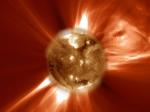 Sun Storm: A Coronal Mass Ejection
5.02.2007
What's happening to our Sun? Another Coronal Mass Ejection (CME)! The Sun-orbiting SOHO spacecraft has imaged many erupting filaments lifting off the active solar surface and blasting enormous bubbles of magnetic plasma into space.
|
January February March April May June July August September October |
|||||||||||||||||||||||||||||||||||||||||||||||||