
|
You entered: merging galaxies
 Black Hole Safety Video
1.10.2019
If you were a small one-eyed monster, would you want to visit a black hole? Well the one in this video does -- but should it? No, actually, but since our little friend is insistent on going, the video informs it what black holes really are, and how to be as safe as possible when visiting.
 A Total Lunar Eclipse Corona
9.06.2021
This moon appears multiply strange. This moon was a full moon, specificallyбcalled a Flower Moon at this time of the year. But that didn't make it strange -- full moons occur once a month (moon-th).
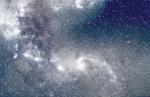 NGC4039: Starbirth and Galaxy Death
6.05.1997
Do star clusters form when galaxies collide? Quite possibly, according to Hubble Space Telescope observations of the "Antennae", two galaxies thought to be in the early stages of a collision.
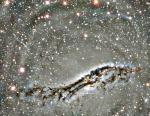 Centaurus A: Young Blue Star Stream
17.10.2002
Almost lost in this cosmic jumble of stars, gas and dust is a faint but definite blue arc -- a stream of young stars whose formation was probably triggered as a small dwarf galaxy was torn apart approaching the giant elliptical galaxy Centaurus A.
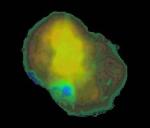 X-Rays From IC 443
2.05.1997
The life-cycles of stars help drive the ecology of our Galaxy, churning, processing, and redistributing matter. Massive stars reach a spectacular evolutionary endpoint - supernovae explosions which blast off their outer layers, violently merging stellar material with the gas and dust of the Milky Way. The supernova remnant IC 443 is typical of the aftermath.
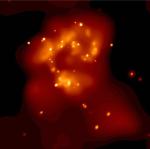 X-Rays From Antennae Galaxies
18.08.2000
A bevy of black holes and neutron stars shine as bright, point-like sources against bubbles of million degree gas in this false-color x-ray image from the orbiting Chandra Observatory. The striking picture shows...
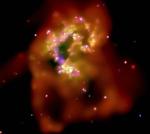 X Rays From Antennae Galaxies
3.02.2004
A bevy of black holes and neutron stars shine as bright, point-like sources against bubbles of million degree gas in this false-color x-ray image from the orbiting Chandra Observatory. The striking picture spans about...
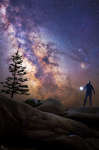 Behold the Universe
3.08.2016
What if you climbed up on a rock and discovered the Universe? You can. Although others have noted much of it before, you can locate for yourself stars, planets, and even the plane of our Milky Way Galaxy. All you need is a dark clear sky -- the rock is optional.
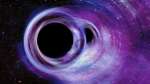 APOD: 2026 April Б Caught in the Web
3.04.2026
How can we see what is invisible? Black holes are not easy to see in the dark cosmic night, but astronomers can find them by analyzing their gravitational effects on matter, light and spacetime.
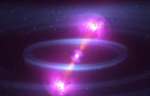 GW170817: A Spectacular Multiradiation Merger Event Detected
16.10.2017
Both gravitational and electromagnetic radiations have been detected in rapid succession for an explosive merging event for the first time. Data from the outburst fit well with a spectacular binary neutron-star death-spiral. The explosive episode was seen on August 17 in nearby NGC 4993, an elliptical galaxy only 130 million light years distant.
|
January February March April May June July |
|||||||||||||||||||||||||||||||||||||||||||||||||