
|
You entered: new moon
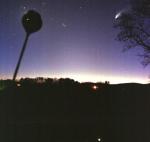 A Hale-Bopp Triple Crown
23.07.1997
It was truly a busy sky. In one of the more spectacular photos yet submitted to Astronomy Picture of the Day, Don Cooke of Lyme, New Hampshire caught the Sun, Moon, Earth, night sky, Pleiades star cluster, and Comet Hale-Bopp all in one frame.
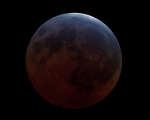 Full Moon in Earth's Shadow
8.04.2015
Last week the Full Moon was completely immersed in Earth's dark umbral shadow, just briefly though. The total phase of the April 4, 2015 lunar eclipse lasted less than 5 minutes, the shortest total lunar eclipse of the century.
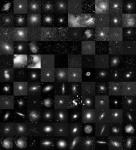 Messier Marathon
18.03.1999
Gripped by an astronomical spring fever, this week many amateur stargazers embark on a Messier Marathon. The Vernal Equinox occurs Saturday, March 20, marking the first day of Spring for the Northern Hemisphere.
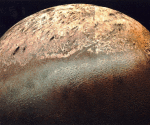 Triton: Neptune's Largest Moon
23.11.1997
On October 10th, 1846, William Lassell was observing the newly discovered planet Neptune. He was attempting to confirm his observation, made just the previous week, that Neptune had a ring. But this time he discovered that Neptune had a satellite as well.
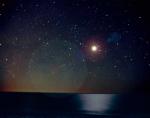 1006 AD: Supernova in the Sky
30.04.2006
A new star, likely the brightest supernova in recorded human history, appeared in planet Earth's sky about 1,000 years ago today, in 1006 AD. The expanding debris cloud from the stellar explosion is still visible to modern astronomers, but what did the supernova look like in 1006?
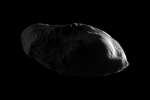 Prometheus Remastered
5.04.2010
What does Saturn's shepherd moon Prometheus really look like? The raw images from the robotic Cassini spacecraft's January flyby of the small moon showed tantalizing clues on grainy images, but now that the Cassini team has digitally remastered these images, many more details have come out.
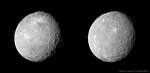 Dark Craters and Bright Spots Revealed on Asteroid Ceres
17.02.2015
What are those bright spots on asteroid Ceres? As the robotic spacecraft Dawn approaches the largest asteroid in the asteroid belt, the puzzle only deepens. Sharper new images taken last week and released yesterday...
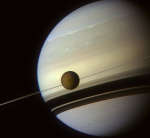 In the Shadow of Saturns Rings
3.07.2012
Humanity's robot orbiting Saturn has recorded yet another amazing view. That robot, or course, is the spacecraft Cassini, while the new amazing view includes a bright moon, thin rings, oddly broken clouds, and warped shadows. Titan, Saturn's largest moon, appears above as a featureless tan as it is continually shrouded in thick clouds.
 1006 AD: Supernova in the Sky
28.03.2003
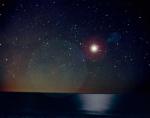
A new star, likely the brightest supernova in recorded human history, appeared in planet Earth's sky in the year 1006 AD. The expanding debris cloud from the stellar explosion is still visible to modern astronomers, but what did the supernova look like in 1006?
 Moons, Rings, and Unexpected Colors on Saturn
20.10.2008
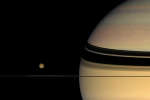
Why would Saturn show such strange colors? The robotic Cassini spacecraft currently orbiting Saturn has beamed back images showing that the northern hemisphere our Solar System's most spectacularly ringed planet has changed noticeably since Cassini arrived in 2004, now sporting unusual and unexpected colors. No one is sure why.
|
January February March April May June July August |
||||||||||||||||||||||||||||||||||||||||||||||||||||||||