
|
You entered: Solar System
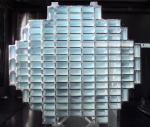 Aerogel For Stardust
17.02.1999
On February 7th, this honey comb of aluminum cells filled with aerogel was launched on the STARDUST mission to interplanetary space. STARDUST's goal is to capture dust from a comet's tail and return to planet Earth - the first sample return mission to a comet!
 APOD: 2025 August 27 Б WISPIT 2b: Exoplanet Carves Gap in Birth Disk
26.08.2025
That yellow spot -- what is it? It's a young planet outside our Solar System. The featured image from the Very Large Telescope in Chile surprisingly captures a distant scene much like our own Solar System's birth, some 4.5 billion years ago.
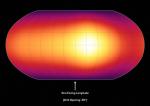 HD 189733b: Hot Jupiter
12.05.2007
HD 189733b is a Jupiter-sized planet known to orbit a star some 63 light-years away. But while the distant world is approximately the size of Jupiter, its close-in orbit makes it much hotter than our solar system's ruling gas giant.
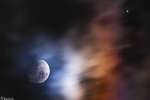 APOD: 2020 September 2 Б Jupiter and the Moons
1.09.2020
How many moons do you see? Many people would say one, referring to the Earth's Moon, prominent on the lower left. But take a closer look at the object on the upper right.
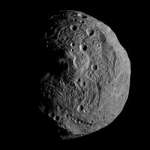 Virtual Flight Over Asteroid Vesta
14.05.2012
What would it be like to fly over the asteroid Vesta? Animators from the German Aerospace Center recently took actual images and height data from NASA's Dawn mission currently visiting Vesta to generate such a virtual movie.
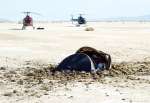 APOD: 2026 July 19 Б Flying Saucer Crash Lands in Utah Desert
18.07.2026
A flying saucer from outer space crash-landed in the Utah desert after being tracked by radar and chased by helicopters. The year was 2004, and no space aliens were involved. The saucer, pictured here...
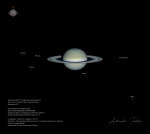 APOD: 2026 August 11 Б Six Moons of Saturn
10.08.2026
How many moons does Saturn have? While the total will likely continue to grow, as of June 2026 the ringed gas giant had 293 confirmed moons. That's easily more than any other planet of the Solar System, including ruling gas giant Jupiter with a mere 115 confirmed moons.
 Interplanetary Earth
22.11.2024
In an interplanetary first, on July 19, 2013 Earth was photographed on the same day from two other worlds of the Solar System, innermost planet Mercury and ringed gas giant Saturn. Pictured...
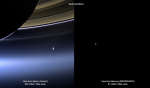 Interplanetary Earth
11.10.2019
In an interplanetary first, on July 19, 2013 Earth was photographed on the same day from two other worlds of the Solar System, innermost planet Mercury and ringed gas giant Saturn. Pictured...
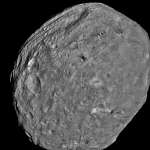 Asteroid Vesta Full Frame
2.08.2011
Why is the northern half of asteroid Vesta more heavily cratered than the south? No one is yet sure. This unexpected mystery has come to light only in the past few weeks since the robotic Dawn mission became the first spacecraft to orbit the second largest object in the asteroid belt between Mars and Jupiter.
|
January February March April May June July August September |
|||||||||||||||||||||||||||||||||||||||||||||||||