
|
You entered: dark matter
 A Force from Empty Space: The Casimir Effect
1.08.2004
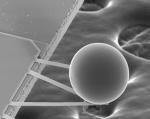
This tiny ball provides evidence that the universe will expand forever. Measuring slightly over one tenth of a millimeter, the ball moves toward a smooth plate in response to energy fluctuations in the vacuum of empty space.
 A Force from Empty Space: The Casimir Effect
17.12.2006
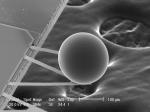
This tiny ball provides evidence that the universe will expand forever. Measuring slightly over one tenth of a millimeter, the ball moves toward a smooth plate in response to energy fluctuations in the vacuum of empty space.
 A Force from Empty Space: The Casimir Effect
6.12.2015
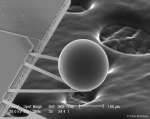
This tiny ball provides evidence that the universe will expand forever. Measuring slightly over one tenth of a millimeter, the ball moves toward a smooth plate in response to energy fluctuations in the vacuum of empty space.
 A Force from Empty Space: The Casimir Effect
3.01.2010
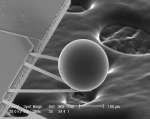
This tiny ball provides evidence that the universe will expand forever. Measuring slightly over one tenth of a millimeter, the ball moves toward a smooth plate in response to energy fluctuations in the vacuum of empty space.
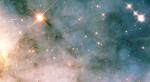 The Turbulent Neighborhood of Eta Carina
26.11.2003
How do violent stars affect their surroundings? To help find out, astronomers pointed the Hubble Space Telescope to the regions surrounding Eta Carina, a star showing signs that it may explode sometime in the next million years.
 Carina Nebula Panorama from Hubble
23.06.2019
How do violent stars affect their surroundings? To help find out, astronomers created a 48-frame high-resolution, controlled-color panorama of the center of the Carina Nebula, one of the largest star forming regions on the night sky. The featured image, taken in 2007, was the most detailed image of the Carina Nebula yet taken.
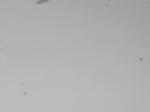 Help Search for Interstellar Dust
25.10.2006
What caused that hole? The hole in question appears as a small dark circle on the far right. If the above image of aerogel seems dull and uninteresting, then welcome to one aspect of real world science.
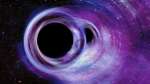 APOD: 2026 April Б Caught in the Web
3.04.2026
How can we see what is invisible? Black holes are not easy to see in the dark cosmic night, but astronomers can find them by analyzing their gravitational effects on matter, light and spacetime.
 A Slice of the Universe with 2dF
14.06.2000
What can 100,000 galaxies tell you? Perhaps the structure and composition of the universe. Astronomers using the Two Degree Field (2dF) spectrograph on the Anglo-Australian Telescope (AAT) in Australia have now measured the redshifts of over 100,000 galaxies in a thin ribbon of the sky.
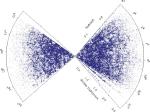 2dF Sees Waves of Galaxies
4.09.2001
How are galaxies distributed in the universe? This question is of more than aesthetic interest because the answer likely holds clues to composition of the universe itself. The above map shows the distribution...
|
January February March April May June July August September October |
|||||||||||||||||||||||||||||||||||||||||||||||||