
|
You entered: Earth's atmosphere
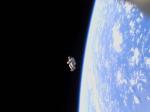 SuitSat1: A Spacesuit Floats Free
20.02.2006
Who dunnit? Like a scene from a space mystery movie, a spacesuit floated away from the International Space Station earlier this month, but no investigation was needed. It was pushed out by the space station crew.
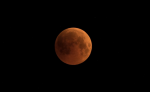 A Total Lunar Eclipse Video
20.01.2019
Tonight a bright full Moon will fade to red. Tonight's moon will be particularly bright because it is reaching its fully lit phase when it is relatively close to the Earth in its elliptical orbit.
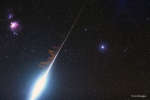 A Blazing Fireball between the Orion Nebula and Rigel
16.11.2015
What's happening to that meteor? A few days ago, a bright fireball was photographed from the Alps mountain range in Switzerland as it blazed across the sky. The fireball, likely from the Taurids...
 APOD: 2024 August 14 Б Meteors and Aurora over Germany
14.08.2024
This was an unusual night. For one thing, the night sky of August 11 and 12, earlier this week, occurred near the peak of the annual Perseid Meteor Shower. Therefore, meteors streaked across the dark night as small bits cast off from Comet Swift-Tuttle came crashing into the Earth's atmosphere.
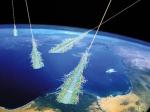 Cosmic Rays
14.08.2006
Have you ever been hit by a beam of high energy particles from above? Surely you have -- it happens all of the time. Showers of high energy particles occur when energetic cosmic rays strike the top of the Earth's atmosphere. Cosmic rays were discovered unexpectedly in 1912.
 Aurora Over Clouds
2.04.2001
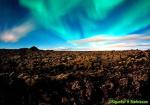
Aurorae usually occur high above the clouds. The auroral glow is created when fast-moving particles ejected from the Sun impact air molecules high in the Earth's atmosphere. An oxygen molecule, for example, will glow in a green light when reacquiring an electron lost during a collision with a solar particle.
 Ganymede: The Largest Moon
14.05.2017
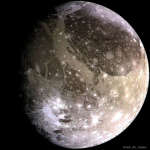
What does the largest moon in the Solar System look like? Jupiter's moon Ganymede, larger than even Mercury and Pluto, has an icy surface speckled with bright young craters overlying a mixture of older, darker, more cratered terrain laced with grooves and ridges.
 A Flag Shaped Aurora over Sweden
14.03.2021
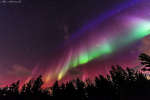
It appeared, momentarily, like a 50-km tall banded flag. In mid-March of 2015, an energetic Coronal Mass Ejection directed toward a clear magnetic channel to Earth led to one of the more intense geomagnetic storms of recent years. A visual result was wide spread auroras being seen over many countries near Earth's magnetic poles.
 A Flag Shaped Aurora over Sweden
30.03.2015
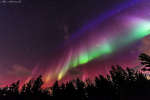
It appeared, momentarily, like a 50-km tall banded flag. In mid-March, an energetic Coronal Mass Ejection directed toward a clear magnetic channel to Earth led to one of the more intense geomagnetic storms of recent years. A visual result was wide spread auroras being seen over many countries near Earth's magnetic poles.
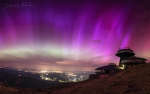 APOD: 2024 June 12 Б Aurora over Karkonosze Mountains
12.06.2024
It was the first time ever. At least, the first time this photographer had ever seen aurora from his home mountains. And what a spectacular aurora it was. The Karkonosze Mountains in Poland are usually too far south to see any auroras.
|
January February March April May June July August September October |
|||||||||||||||||||||||||||||||||||||||||||||||||