
|
You entered: all sky
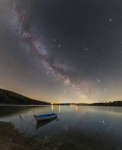 Lyrid Meteors from the Constellation Lyra
12.05.2020
Where are all of these meteors coming from? In terms of direction on the sky, the pointed answer is the constellation of Small Harp (Lyra). That is why the famous meteor shower that peaks every April is known as the Lyrids -- the meteors all appear to came from a radiant toward Lyra.
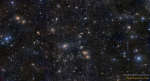 Virgo Cluster Galaxies
4.08.2015
Well over a thousand galaxies are known members of the Virgo Cluster, the closest large cluster of galaxies to our own local group. In fact, the galaxy cluster is difficult to appreciate all at once because it covers such a large area on the sky.
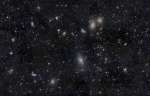 Virgo Cluster Galaxies
22.04.2011
Well over a thousand galaxies are known members of the Virgo Cluster, the closest large cluster of galaxies to our own local group. In fact, the galaxy cluster is difficult to appreciate all at once because it covers such a large area on the sky.
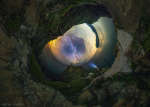 Eye Sky a Dragon
22.09.2019
What do you see when you look into this sky? In the center, in the dark, do you see a night sky filled with stars? Do you see a sunset to the left? Clouds all around? Do you see the central band of our Milky Way Galaxy running down the middle?
 APOD: 2025 July 1 Б Eye Sky a Dragon
1.07.2025
What do you see when you look into this sky? In the center, in the dark, do you see a night sky filled with stars? Do you see a sunset to the left? Clouds all around? Do you see the central band of our Milky Way Galaxy running down the middle?
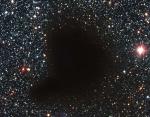 Molecular Cloud Barnard 68
23.09.2001
Where did all the stars go? What used to be considered a hole in the sky is now known to astronomers as a dark molecular cloud. Here, a high concentration of dust and molecular gas absorb practically all the visible light emitted from background stars.
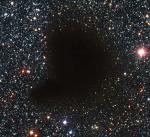 Molecular Cloud Barnard 68
11.05.1999
Where did all the stars go? What used to be considered a hole in the sky is now known to astronomers as a dark molecular cloud. Here, a high concentration of dust and molecular gas absorb practically all the visible light emitted from background stars.
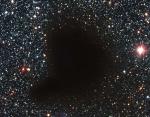 Molecular Cloud Barnard 68
2.02.2003
Where did all the stars go? What used to be considered a hole in the sky is now known to astronomers as a dark molecular cloud. Here, a high concentration of dust and molecular gas absorb practically all the visible light emitted from background stars.
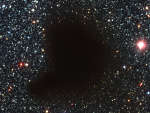 Molecular Cloud Barnard 68
23.03.2008
Where did all the stars go? What used to be considered a hole in the sky is now known to astronomers as a dark molecular cloud. Here, a high concentration of dust and molecular gas absorb practically all the visible light emitted from background stars.
 A Thousand Meteors
12.09.2020
Over a thousand meteors flash through the night in this intriguing timelapse video. Starting in April 2019 the individual video frames were selected from 372 relatively clear nights of imaging from an automated wide-field observatory in rural New South Wales Australia.
|
January February March April May June July August September October |
|||||||||||||||||||||||||||||||||||||||||||||||||