
|
You entered: Saturn
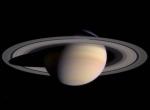 Eyeful of Saturn
30.04.2004
Now a bright speck of light wandering through Earth's night sky, magnificent planet Saturn lies nearly 1.5 billion kilometers from the Sun. But after an interplanetary voyage of seven years the planet's stunning rings nearly fill the field of the Cassini spacecraft's narrow angle camera in this image recorded on March 27.
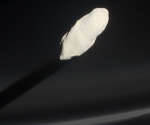 Prometheus Rising Through Saturns F Ring
19.10.2010
What is that dark streak below Prometheus? Although it may look like a shadow or a trail blazed by sweeping up material, computer simulations indicate that the dark streak is better understood as an empty path pulled away by the gravity of Saturn's small moon.
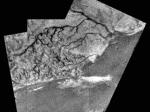 Riverbeds and Lakebeds Discovered on Saturn's Titan
24.01.2005
Methane rain, evaporating lakes, flowing rivers, and water ice-volcanoes all likely exist on Saturn's moon Titan, according to preliminary analyses of recent images taken by the successful Huygen's lander. A snaking...
 Cassini Approaches Saturn
15.03.2011
What would it look like to approach Saturn in a spaceship? One doesn't have to just imagine -- the Cassini spacecraft did just this in 2004, recording thousands of images along the way, and thousands more since entering orbit.
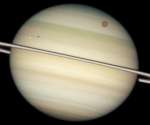 Saturn: Moons in Transit
19.03.2009
Every 14 to 15 years, Saturn's rings are tilted edge-on to our line of sight. As the bright, beautiful rings seem to grow narrower it becomes increasingly difficult to see them, even with large telescopes. But it does provide the opportunity to watch multiple transits of Saturn's moons.
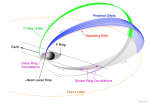 Cassinis Grand Finale Tour at Saturn
25.01.2017
Cassini is being prepared to dive into Saturn. The robotic spacecraft that has been orbiting and exploring Saturn for over a decade will end its mission in September with a spectacular atmospheric plunge. Pictured here is a diagram of Cassini's remaining orbits, each taking about one week.
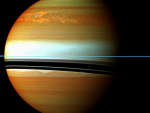 A Raging Storm System on Saturn
26.12.2011
It is one of the largest and longest lived storms ever recorded in our Solar System. First seen late last year, the above cloud formation in the northern hemisphere of Saturn started larger than the Earth and soon spread completely around the planet.
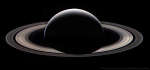 APOD: 2026 June 1 Б Saturn at Night
1.06.2026
Telescopic views of Saturn and its beautiful rings often make it the star of star parties. But this stunning view of the outer gas gaint planet's rings and night side just isn't possible from telescopes in the vicinity of planet Earth.
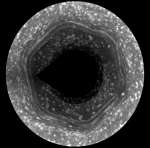 Saturns Hexagon Comes to Light
22.01.2012
Believe it or not, this is the North Pole of Saturn. It is unclear how an unusual hexagonal cloud system that surrounds Saturn's north pole was created, keeps its shape, or how long it will last.
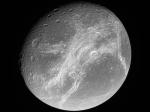 Bright Cliffs Across Saturns Moon Dione
5.09.2006
What causes the bright streaks on Dione? Recent images of this unusual moon by the robot Cassini spacecraft now orbiting Saturn are helping to crack the mystery. Close inspection of Dione's trailing hemisphere, pictured above, indicates that the white wisps are composed of deep ice cliffs dropping hundreds of meters.
|
January February March April May June July August September October |
|||||||||||||||||||||||||||||||||||||||||||||||||