
|
You entered: apollo
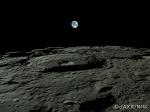 Earthrise from Moon Orbiting Kaguya
20.11.2007
What does the Earth look like from the Moon? A new version of this space age perspective was captured by the robotic Kaguya spacecraft currently in orbit around Earth's Moon. Launched two months...
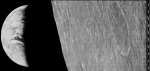 Restored: First Image of the Earth from the Moon
18.11.2008
Pictured above is the first image ever taken of the Earth from the Moon. The image was taken in 1966 by Lunar Orbiter 1 and heralded by then-journalists as the Image of the Century. It was taken about two years before the Apollo 8 crew snapped its more famous color cousin.
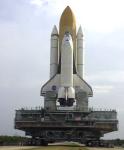 The Shuttle Crawler Transporter
4.03.2002
NASA's Crawler-Transporters are the largest tracked vehicles in existence. Although the crawlers pack over 5,000 horsepower, their top speed is less than two kilometers per hour when fully loaded. Eleven people are needed to drive a single crawler. Diesel fuel mileage is about 350 liters per kilometer (less than 0.007 miles per gallon).
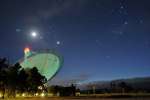 Dawn of the Dish
19.07.2012
Wandering planets Venus and Jupiter were joined by an old crescent Moon near the eastern horizon on July 15. This serene southern skyview of the much anticipated predawn conjunction includes the lovely Pleiades star cluster and bright stars Aldebaran and Betelgeuse in the celestial lineup.
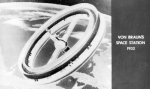 Von Braun's Wheel
28.03.1998
Orbiting 1,075 miles above the Earth, a 250 foot wide, inflated, reinforced nylon "wheel" was conceived in the early 1950s to function as a navigational aid, meteorological station, military platform, and way station for space exploration by rocket pioneer Wernher von Braun.
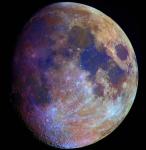 The Color of the Moon
16.02.2006
Earth's Moon is normally seen in subtle shades of grey or yellow. But small color differences have been greatly exaggerated to make this dramatic mosaic image of the Moon's gibbous phase. The familiar Sea of Tranquility (Mare Tranquillitatis) is the blue area right of center.
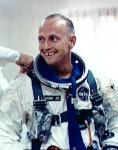 Charles P. Conrad Jr 1930 1999
15.07.1999
Known for his sense of humor and infectious grin, Charles P. "Pete" Conrad, as commander of the Apollo 12 mission, was the third person to walk on the moon. Not a tall man, Conrad stepped down onto the lunar surface in November of 1969 and gleefully commented, "Whoopie!
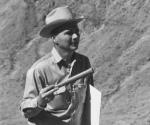 Eugene Shoemaker: 1928-1997
15.01.1998
Eugene Shoemaker's passion was Astrogeology. He dreamed of going to the Moon. Credited with inventing the branch of Astrogeology within the U.S. Geological Survey, his contributions to the field and the study of impact craters, lunar science, asteroids, and comets are legendary.
 Rima Hyginus
22.02.2025
Rima Hyginus is a spectacular fissure, some 220 kilometers long, found near the center of the lunar near side. Easy to spot in telescopic views of the Moon, it stretches top left to bottom right across this lunar closeup. The image was made with exaggerated colors that reflect the mineral composition of the lunar soil.
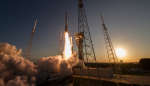 The Launch of OSIRIS REx
10.09.2016
Near sunset on Thursday, clear skies saw the launch of the OSIRIS-REx spacecraft. Sporting a single solid rocket booster, its Atlas V vehicle blasts off from Cape Canaveral's Complex 41 in this low, wide-angle view toward launch pad and setting Sun. OSIRIS-REx is bound for Bennu, scheduled to encounter the mountain-sized asteroid in 2018.
|
January February March April |
|||||||||||||||||||||||||||||||||||||||||||||||||