
|
You entered: Earth
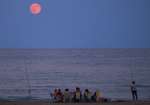 Alicante Beach Moonrise
19.07.2014
In this beach and skyscape from Alicante, Spain, July's Full Moon shines in the dark blue twilight, its reflection coloring the Mediterranean waters. Near the horizon, the moonlight is reddened by its long...
 Lunar View, Solar Eclipse
31.08.2017
Orbiting above the lunar nearside on August 21, the Lunar Reconnaissance Orbiter turned to look back on a bright, Full Earth. As anticipated its Narrow Angle Camera scanned this sharp view of our fair...
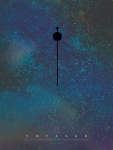 Milky Way Voyager
2.09.2017
Launched in 1977 on a tour of the outer planets of the Solar System, Voyager 1 and 2 have become the longest operating and most distant spacecraft from Earth. Nearly 16 light-hours from...
 APOD: 2024 September 11 Б A Night Sky over the Tatra Mountains
11.09.2024
A natural border between Slovakia and Poland is the Tatra Mountains. A prominent destination for astrophotographers, the Tatras are the highest mountain range in the Carpathians. In the featured image taken...
 Sunset Afterimage
31.05.2025
On May 7, the Sun setting behind a church bell tower was captured in this filtered and manipulated digital skyscape from Ragusa, Sicily, planet Earth. In this version of the image the colors look bizarre.
 APOD: 2025 November 17 Б Comet Lemmons Wandering Tail
17.11.2025
What has happened to Comet Lemmon's tail? The answer is blowing in the wind Б the wind from the Sun in this case. This continuous outflow of charged particles from...
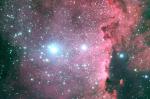 Hot Stars in the Southern Milky Way
7.05.1999
Hot blue stars, red glowing hydrogen gas, and dark, obscuring dust clouds are strewn through this dramatic region of the Milky Way in the southern constellation of Ara (the Altar). About 4,000 light-years from Earth, the stars at the left are young, massive, and energetic.
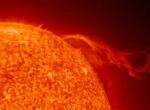 Escape From The Sun
20.11.1997
Twisted magnetic fields arching from the solar surface can trap ionized gas, suspending it in huge looping structures. These majestic plasma arches are seen as prominences above the solar limb. On September 14, this...
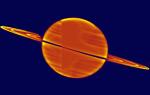 Sunlight Through Saturns Rings
24.06.2000
Normally, earth-bound astronomers view Saturn's spectacular ring system fully illuminated by reflected sunlight. However, this intriguing picture was made to take advantage of an unusual orientation, with the Sun actually illuminating the rings from below. The three bright ring features are visible because the rings themselves are not solid.
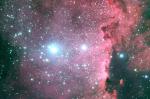 Hot Stars in the Southern Milky Way
22.12.2001
Hot blue stars, red glowing hydrogen gas, and dark, obscuring dust clouds are strewn through this dramatic region of the Milky Way in the southern constellation of Ara (the Altar). About 4,000 light-years from Earth, the stars at the left are young, massive, and energetic.
|
January February March April May June July August September October |
|||||||||||||||||||||||||||||||||||||||||||||||||