
|
You entered: pole
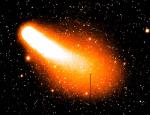 Comet Linear (WM1) Brightens
6.12.2001
A comet bright enough to be seen with binoculars is swooping into southern skies. Comet C/2000 WM1 (LINEAR) continues to brighten and develop tails as it nears its closest approach of the Sun in late January 2002.
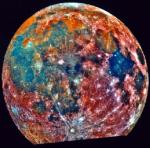 The Colorful Moon
7.01.1998
Do you recognize the Earth's Moon when you see it? The crazy, patchwork appearance of this false color image makes this nearly full view of our Moon's familiar nearside look very strange. The image was taken in 1992 by the Galileo spacecraft enroute to Jupiter.
 Galactic Cirrus: Mandel Wilson 9
21.07.2023
The combined light of stars along the Milky Way are reflected by these cosmic dust clouds that soar 300 light-years or so above the plane of our galaxy. Known to some as integrated flux nebulae and commonly found at high galactic latitudes, the dusty galactic cirrus clouds are faint.
 Athena to the Moon
28.02.2025
Planet Earth hangs in the background of this space age selfie. The snapshot was captured by the IM-2 Nova-C lander Athena, just after stage separation following its February 26 launch to the Moon.
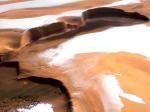 Steep Cliffs on Mars
15.03.2005
Vertical cliffs of nearly two kilometers occur near the North Pole of Mars. Also visible in the above image of the Martian North Polar Cap are red areas of rock and sand, white areas of ice, and dark areas of unknown composition but hypothesized to be volcanic ash.
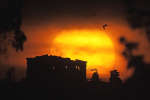 Sunrise over the Parthenon
21.06.2009
Today, the sun will stay in the sky longer than any other day of the year, as seen from the northern hemisphere of Earth. Named the Summer Solstice, today's maximum daylight is indicative of the high amount of sunlight this time of year that is primarily responsible for the heat of the summer season.
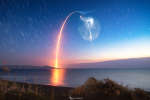 South Celestial Rocket Launch
28.02.2020
At sunset on December 6 a Rocket Lab Electron rocket was launched from a rotating planet. With multiple small satellites on board it departed on a mission to low Earth orbit dubbed Running Out of Fingers from Mahia Peninsula on New Zealand's north island.
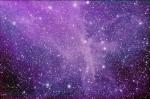 An Unexplored Nebula
29.09.2005
The combined light of the stars of the Milky Way are reflected by this cosmic dust cloud that soars some 300 light-years above the plane of our Galaxy. Dubbed the Angel Nebula by astronomer...
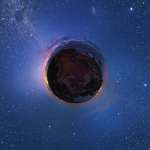 Little Planet Lovejoy
11.01.2012
Once a bright apparition in the southern hemisphere dawn Comet Lovejoy is fading, but its long tail still stretches across skies near the south celestial pole. Captured on the morning of December 30th, the comet appears near edge of this little planet as well.
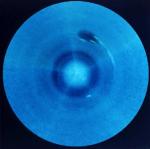 Southern Neptune
27.06.1998
Neptune, the Solar System's outermost gas giant planet, is 30 times farther from the Sun than Earth. Twelve years after a 1977 launch, Voyager 2 flew by Neptune and found surprising activity on a planet that receives only 3 percent as much sunlight as Jupiter.
|
January February March April May June July August |
||||||||||||||||||||||||||||||||||||||||||||||||||||||||