
|
You entered: galaxies
 APOD: 2024 February 19 Б Looking Sideways from the Parker Solar Probe
19.02.2024
What's happening near the Sun? To help find out, NASA launched the robotic Parker Solar Probe (PSP) to investigate regions closer to the Sun than ever before. The PSP's looping orbit brings it nearer to the Sun each time around -- every few months.
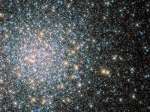 Hubble s Messier 5
25.04.2014
"Beautiful Nebula discovered between the Balance [Libra] & the Serpent [Serpens] ..." begins the description of the 5th entry in 18th century astronomer Charles Messier's famous catalog of nebulae and star clusters. Though it appeared...
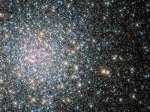 Hubble s Messier 5
20.06.2015
"Beautiful Nebula discovered between the Balance [Libra] & the Serpent [Serpens] ..." begins the description of the 5th entry in 18th century astronomer Charles Messier's famous catalog of nebulae and star clusters. Though it appeared...
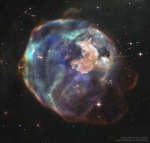 N63A: Supernova Remnant in Visible and X-ray
11.12.2019
What has this supernova left behind? As little as 2,000 years ago, light from a massive stellar explosion in the Large Magellanic Cloud (LMC) first reached planet Earth. The LMC is a close...
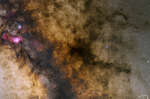 The Central Milky Way from Lagoon to Pipe
1.10.2021
Dark markings and colorful clouds inhabit this stellar landscape. The deep and expansive view spans more than 30 full moons across crowded star fields toward the center of our Milky Way Galaxy. Cataloged in the early 20th century by astronomer E. E.
 A Redshift Lookup Table for our Universe
8.04.2013
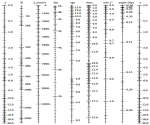
How far away is "redshift six"? Although humans are inherently familiar with distance and time, what is actually measured for astronomical objects is redshift, a color displacement that depends on exactly how energy density has evolved in our universe.
 The Cone Nebula from Hubble
15.03.2017
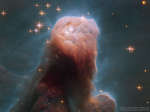
Stars are forming in the gigantic dust pillar called the Cone Nebula. Cones, pillars, and majestic flowing shapes abound in stellar nurseries where natal clouds of gas and dust are buffeted by energetic winds from newborn stars. The Cone Nebula, a well-known example, lies within the bright galactic star-forming region NGC 2264.
 APOD: 2020 August 26 Б Cygnus Skyscape
26.08.2020
In brush strokes of interstellar dust and glowing hydrogen gas, this beautiful skyscape is painted across the plane of our Milky Way Galaxy near the northern end of the Great Rift and the constellation Cygnus the Swan.
 Cygnus Trio
7.11.2008
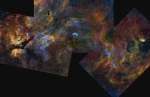
In this colorful mosaic, filaments of gas and dust span some 9 degrees across central Cygnus, a nebula rich constellation along the northern Milky Way. A trio of nebulae with popular names highlights the beautiful skyscape - the Butterfly, the Crescent, and the Tulip.
 The Local Fluff
24.09.2013
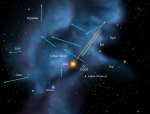
The stars are not alone. In the disk of our Milky Way Galaxy about 10 percent of visible matter is in the form of gas, called the interstellar medium (ISM). The ISM is not uniform, and shows patchiness even near our Sun.
|
January February March April May June July August September October |
|||||||||||||||||||||||||||||||||||||||||||||||||