
|
You entered: Earth
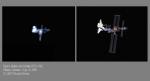 Space Station and Space Shuttle: Backyard View
12.10.2001
Knowing when and where to look, many enthusiastic sky gazers have been able to spot the International Space Station (ISS) as a bright star streaking through the twilight. But with a digital camera and a small telescope, recognizable images are possible too.
 The View from Everest
23.07.2002
What would it be like to stand atop the tallest mountain on Earth? To see a full panoramic vista from there, scroll right. Visible are snow peaked mountains near and far, tremendous cliffs, distant plateaus, the tops of clouds, and a dark blue sky. Mt.
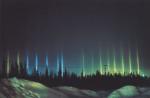 Colorful Light Pillars
2.09.2002
How can an aurora appear so near the ground? Pictured above are not aurora but nearby light pillars, a local phenomenon that can appear as a distant one. In most places on Earth...
 The View from Everest
31.08.2003
What would it be like to stand atop the tallest mountain on Earth? To see a full panoramic vista from there, scroll right. Visible are snow peaked mountains near and far, tremendous cliffs, distant plateaus, the tops of clouds, and a dark blue sky. Mt.
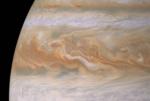 Jupiter Portrait
13.11.2003
Every day is a cloudy day on Jupiter, the Solar System's reigning gas giant. And swirling cloud tops are all you see in this stunningly detailed true color image, a portion of a large digital mosaic portrait of Jupiter recorded from the Cassini spacecraft during its Jovian flyby in December 2000.
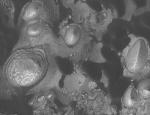 Layered Hills on Mars
23.12.2003
Why are some hills on Mars so layered? The answer is still under investigation. Clearly, dark windblown sand surrounds outcropping of light sedimentary rock across the floor of crater Arabia Terra. The light rock clearly appears structured into many layers, the lowest of which is likely very old.
 Orions Horsehead Nebula
20.03.2005
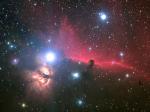
The Horsehead Nebula is one of the most famous nebulae on the sky. It is visible as the dark indentation to the red emission nebula seen above and to the right of center in the above photograph. The bright star on the left is located in the belt of the familiar constellation of Orion.
 Where is Upsilon Andromedae
22.04.1999
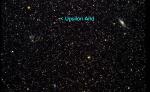
Astronomers recently announced the detection of three large planets orbiting the star Upsilon Andromedae - the first planetary system known to orbit a normal star other than our Sun. These planets were not directly photographed but found through a Doppler technique developed to use large telescopes to search nearby stars for wobbling planetary signatures.
 Colorful Light Pillars
4.03.2006
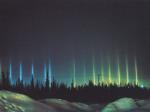
How can an aurora appear so near the ground? Pictured above are not aurora but nearby light pillars, a local phenomenon that can appear as a distant one. In most places on Earth...
 X ray Transit of Mercury
5.11.1999
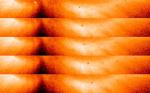
This sequence of false color X-ray images captures a rare event - the passage or transit of planet Mercury in front of the Sun. Mercury's small disk is silhouetted against the bright background of X-rays from the hot Solar Corona.
|
January February March April May June July August September October |
|||||||||||||||||||||||||||||||||||||||||||||||||