
|
You entered: launch
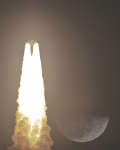 Artemis 1 Moonshot
19.11.2022
When the Artemis 1 mission's Orion spacecraft makes its November 21 powered flyby of the Moon, denizens of planet Earth will see the Moon in a waning crescent phase. The spacecraft will approach...
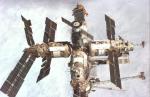 Mir Above
3.07.1998
Photographed from the approaching Space Shuttle Endeavour, the Mir space station floats above the clouds of planet Earth. Mir's modular construction, bristling with solar panels and antennas, lends it a slightly whimsical, insect-like appearance.
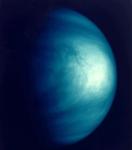 Venus: Just Passing By
1.05.1998
Venus, the second closest planet to the Sun, is a popular way-point for spacecraft headed for the gas giant planets in the outer reaches of the solar system. Why visit Venus first? Using...
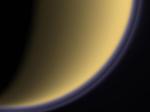 The Double Haze above Titan
10.08.2004
Most moons have no haze layer at all - why does Titan have two? Images from the Cassini spacecraft that slipped into orbit around Saturn last month confirm that the Solar System's most mysterious moon is surrounded not only by a thick atmosphere but also by two distinct spheres of haze.
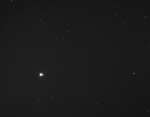 Earth and Moon from MESSENGER
1.09.2010
What does Earth look like from the planet Mercury? The robotic spacecraft MESSENGER found out as it looked toward the Earth during its closest approach to the Sun about three months ago. The Earth and Moon are visible as the double spot on the lower left of the above image.
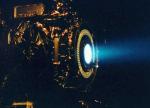 An Ion Drive for Deep Space 1
26.10.1998
Space travel entered the age of the ion drive Saturday with the launch of Deep Space 1, a NASA mission designed primarily to test new technologies. Deep Space 1 is bound for asteroid 1992 KD in July 1999.
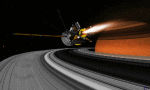 Cassini To Saturn
29.08.1997
Scheduled for launch in October, the Cassini spacecraft will spend seven years traveling through the Solar System -- its destination, Saturn. On arrival Cassini will begin an ambitious mission of exploration which will include parachuting a probe to the surface of Titan, Saturn's largest moon.
 Genesis Missions Hard Impact
14.09.2004
A flying saucer from outer space crash-landed in the Utah desert last week after being tracked by radar and chased by helicopters. No space aliens were involved, however. The saucer, pictured above...
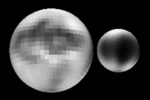 Mysterious Pluto and Charon
9.04.2000
Pluto is the only planet in our Solar System remaining unphotographed by a passing spacecraft. Distant Pluto and its moon Charon therefore remain somewhat mysterious. In addition to direct imaging by the Hubble Space...
 The Mountains of NGC 2174
16.01.2021
This fantastic skyscape lies near the edge of NGC 2174 a star forming region about 6,400 light-years away in the nebula-rich constellation of Orion. It follows mountainous clouds of gas and dust carved...
|
January February March April May June July August September October |
|||||||||||||||||||||||||||||||||||||||||||||||||