
|
You entered: southern sky
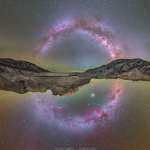 The Complete Galactic Plane: Up and Down
13.03.2018
Is it possible to capture the entire plane of our galaxy in a single image? Yes, but not in one exposure -- and it took some planning to do it in two. The top part of the featured image is the night sky above Lebanon, north of the equator, taken in 2017 June.
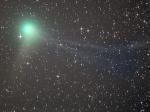 Announcing Comet Machholz
13.12.2004
A comet discovered only this summer is brightening quickly and already visible to the unaided eye. Comet C/2004 Q2 (Machholz) is currently best visible in Earth's Southern Hemisphere where some observers report it brighter than magnitude 5. The comet is moving rapidly to northern skies and should continue to brighten until early January.
 Spiral Galaxy M83: The Southern Pinwheel
28.01.2014
M83 is one of the closest and brightest spiral galaxies on the sky. Visible with binoculars in the constellation of Hydra, majestic spiral arms have prompted its nickname as the Southern Pinwheel. Although discovered...
 APOD: 2026 March 20 Б Spring Equinox at Teide Observatory
20.03.2026
The defining astronomical moment of the equinox today is at 14:46 UTC (March 20). That's when the Sun crosses the celestial equator moving north in its yearly journey through planet Earth's sky, marking the beginning of spring for our fair planet in the northern hemisphere and fall in the southern hemisphere.
 APOD: 2025 February 17 Б SpaceX Rocket Launch Plume over California
17.02.2025
What's happened to the sky? Last Monday, the photogenic launch plume from a SpaceX rocket launch created quite a spectacle over parts of southern California and Arizona. Looking at times like a giant...
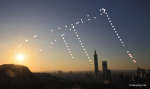 Analemma over Taipei
21.06.2022
Does the Sun return to the same spot on the sky every day? No. A better and more visual answer to that question is an analemma, a composite of images taken at the same time and from the same place over the course of a year.
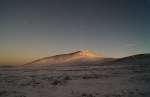 The Snows of Paranal
11.08.2011
Recorded last week, this dawn portrait of snowy mountain and starry sky captures a very rare scenario. The view does feature a pristine sky above the 2,600 meter high mountain Cerro Paranal, but clear skies over Paranal are not at all unusual.
 September Sunrise Shadows
24.09.2022
The defining astronomical moment for this September's equinox was on Friday, September 23, 2022 at 01:03 UTC, when the Sun crossed the celestial equator moving south in its yearly journey through planet Earth's sky.
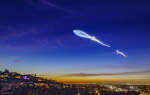 SpaceX Rocket Launch Plume over California
24.12.2017
What's happened to the sky? On Friday, the photogenic launch plume from a SpaceX rocket launch created quite a spectacle over parts of southern California and Arizona. Looking at times like a giant...
 Sunrise Shadows in the Sky
21.09.2024
The defining astronomical moment of this September's equinox is at 12:44 UTC on September 22, when the Sun crosses the celestial equator moving south in its yearly journey through planet Earth's sky.
|
January February March April May June July August September |
|||||||||||||||||||||||||||||||||||||||||||||||||