
|
You entered: Earth orbit
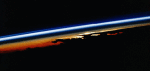 The Sun Also Rises
17.11.1995
Sunrise seen from low Earth orbit by the shuttle astronauts can be very dramatic indeed (and the authors apologize to Hemingway for using his title!). In this breathtaking view, the Sun is just visible...
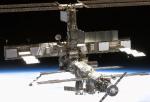 The International Space Station from Orbit
16.08.2005
The International Space Station (ISS) is the largest human-made object ever to orbit the Earth. Late last month and earlier this month, the station was visited and resupplied by space shuttle Discovery. The ISS is currently operated by the Expedition 11 crew, consisting a Russian and an American astronaut.
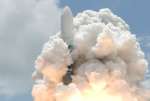 At Last, GLAST
13.06.2008
Rising through a billowing cloud of smoke, this Delta II rocket left Cape Canaveral Air Force Station's launch pad 17-B Wednesday at 12:05 pm EDT. Snug in the payload section was GLAST, the Gamma-ray Large Area Space Telescope, now in orbit around planet Earth.
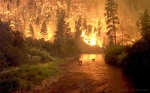 Fire on Earth
1.09.2013
Sometimes, regions of planet Earth light up with fire. Since fire is the rapid acquisition of oxygen, and since oxygen is a key indicator of life, fire on any planet would be an indicator of life on that planet.
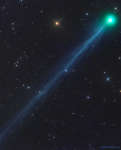 The Ion Tail of New Comet SWAN
29.04.2020
Newly discovered Comet SWAN has already developed an impressive tail. The comet came in from the outer Solar System and has just passed inside the orbit of the Earth. Officially designated C/2020 F8 (SWAN)...
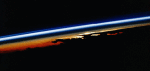 The Sun Also Rises
15.01.2000
Sunrise seen from low Earth orbit can be very dramatic indeed (and the authors don't apologize to Hemingway for using his title!). In this breathtaking view from the space shuttle Endeavor, the Sun is just visible peaking over towering anvil-shaped storm clouds.
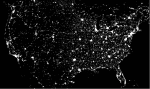 The United States at Night
30.08.1997
This is what the United States of America looks like at night! Can you find your favorite US city on this image? Surprisingly, city lights make this task quite possible. The above picture is actually a composite of over 200 images made by satellites orbiting the Earth.
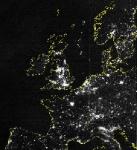 Europe at Night
7.10.1997
This is what Europe looks like at night! Can you find your favorite European city? Although not all of Europe is shown, city lights might make this task possible. Continental outlines have been artificially drawn in yellow. The above picture is actually a composite of over 200 images made by satellites orbiting the Earth.
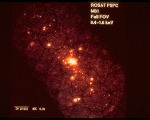 The X-ray Sources of M31
31.12.1995
Just like our own Milky Way Galaxy, the nearest major galaxy M31 has many star systems spewing high energy radiation. High energy X-radiation is visible to certain satellites in Earth orbit such as ROSAT - which took the above picture.
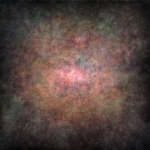 Median Mashup: Hubble s Top 100
13.09.2014
Now, as you sip your cosmic latte you can view 100 Hubble Space Telescope images at the same time. The popular scenes of the cosmos as captured from low Earth orbit are all combined into this single digital presentation. To make it, Hubble's top 100 images were downloaded and resized to identical pixel dimensions.
|
January February March April May June July August September October |
|||||||||||||||||||||||||||||||||||||||||||||||||