
|
You entered: Earth
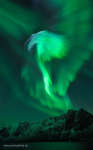 Eagle Aurora over Norway
14.07.2019
What's that in the sky? An aurora. A large coronal mass ejection occurred on our Sun five days before this 2012 image was taken, throwing a cloud of fast moving electrons, protons, and ions toward the Earth.
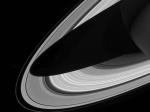 A Shadow on the Rings of Saturn
21.07.2004
This picture of Saturn could not have been taken from Earth. No Earth based picture could possibly view the night side of Saturn and the corresponding shadow cast across Saturn's rings. Since Earth is much closer to the Sun than Saturn, only the day side of the planet is visible from the Earth.
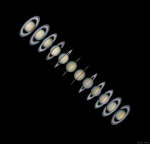 Rings and Seasons of Saturn
19.09.2021
On Saturn, the rings tell you the season. On Earth, Wednesday marks an equinox, the time when the Earth's equator tilts directly toward the Sun. Since Saturn's grand rings orbit along...
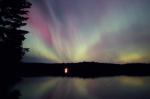 A Colorful Aurora
1.09.1998
A solar storm overtook the Earth on August 26th. The Earth survived unscathed, as usual, although many northerners reported an impressive display of aurora. Many of these auroras changed rapidly, with patterns appearing and disappearing sometimes in less than a second. Out away from city lights, observers also reported an unusually spectacular array of colors.
 Hubble Floats Free
6.03.1997
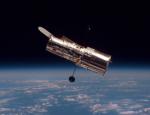
Why put observatories in space? Most telescopes are on the ground. On the ground, you can deploy a heavier telescope and upgrade it more easily. The trouble is that Earth-bound telescopes must look through the Earth's atmosphere.
 Solar Eclipse from the Moon
2.03.2007
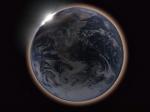
Parts of Saturday's (March 3) lunar eclipse will be widely visible. For example, skywatchers in Europe, Africa, and western Asia will be able to see the entire spectacle of the Moon gliding through Earth's shadow, but in eastern North America the Moon will rise already in its total eclipse phase.
 Two Worlds One Sun
12.05.2015
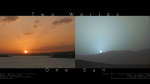
How different does sunset appear from Mars than from Earth? For comparison, two images of our common star were taken at sunset, one from Earth and one from Mars. These images were scaled to have same angular width and featured here side-by-side.
 Perihelion and Aphelion
3.07.2009
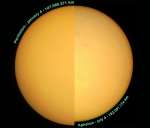
This year Aphelion, the point in Earth's elliptical orbit when it is farthest from the Sun, occurs tomorrow, July 4th. Of course, that doesn't affect the seasons on our fair planet. Those...
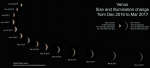 Phases of Venus
17.03.2017
Just as the Moon goes through phases, Venus' visible sunlit hemisphere waxes and wanes. This composite of telescopic images illustrates the steady changes for the inner planet, seen in the west as the evening star, as Venus grows larger but narrows to a thin crescent from December 20, 2016 through March 10.
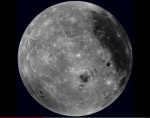 Rotating Moon from LRO
18.03.2018
No one, presently, sees the Moon rotate like this. That's because the Earth's moon is tidally locked to the Earth, showing us only one side. Given modern digital technology, however, combined with many detailed images returned by the Lunar Reconnaissance Orbiter (LRO), a high resolution virtual Moon rotation movie has been composed.
|
January February March April May June July August September October |
|||||||||||||||||||||||||||||||||||||||||||||||||