
|
You entered: southern sky
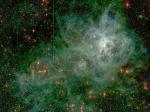 30 Doradus: The Tarantula Nebula
26.10.1999
30 Doradus is an immense star forming region in a nearby galaxy known as the Large Magellanic Cloud. Its spidery appearance is responsible for its popular name, the Tarantula Nebula, except that this tarantula is about 1,000 light-years across, and 165,000 light-years away in the southern constellation Dorado.
 Gigagalaxy Zoom: Milky Way
26.09.2009
Our magnificent Milky Way Galaxy sprawls across this ambitious all-sky panorama. In fact, at 800 million pixels the full resolution mosaic strives to show all the stars the eye can see in planet Earth's night sky.
 Analemma of the Moon
13.07.2005
An analemma is that figure-8 curve you get when you mark the position of the Sun at the same time each day for one year. But the trick to imaging an analemma...
 Sunrise Solstice at Stonehenge
21.06.2006
Today the Sun reaches its northernmost point in the planet Earth's sky. Called a solstice, the date traditionally marks a change of seasons -- from spring to summer in Earth's Northern Hemisphere and from fall to winter in Earth's Southern Hemisphere. Pictured above is the 2005 Summer Solstice celebration at Stonehenge in England.
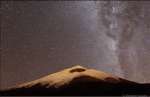 Clouds and Stars over Cotopaxi Volcano in Ecuador
26.05.2010
What's happening above the Cotopaxi volcano in Ecuador? Quite a bit, from the looks of the above one-night, time-lapse movie, taken earlier this month. The majestic volcano is first seen through breaks in fast moving clouds as the movie begins.
 Zodiacal Light Over Namibia
13.09.2010
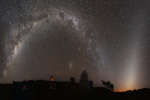
An unusual triangle of light is visible this time of year just before dawn, in the northern hemisphere. Once considered a false dawn, this triangle of light is actually zodiacal light, light reflected from interplanetary dust particles.
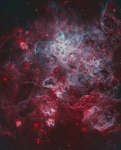 The Tarantula Zone
13.11.2020
The Tarantula Nebula, also known as 30 Doradus, is more than a thousand light-years in diameter, a giant star forming region within nearby satellite galaxy the Large Magellanic Cloud. About 180 thousand light-years away, it's the largest, most violent star forming region known in the whole Local Group of galaxies.
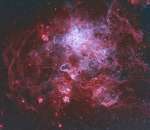 The Tarantula Nebula
16.11.2017
The Tarantula Nebula is more than a thousand light-years in diameter, a giant star forming region within nearby satellite galaxy the Large Magellanic Cloud, about 180 thousand light-years away. The largest, most violent star...
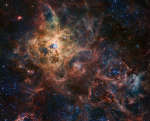 The Tarantula Nebula
26.02.2016
The Tarantula Nebula is more than a thousand light-years in diameter, a giant star forming region within nearby satellite galaxy the Large Magellanic Cloud, about 180 thousand light-years away. The largest, most violent star...
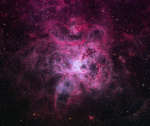 The Tarantula Nebula
17.11.2018
The Tarantula Nebula, also known as 30 Doradus, is more than a thousand light-years in diameter, a giant star forming region within nearby satellite galaxy the Large Magellanic Cloud. About 180 thousand light-years away, it's the largest, most violent star forming region known in the whole Local Group of galaxies.
|
January February March April May June July August September |
|||||||||||||||||||||||||||||||||||||||||||||||||