
|
You entered: Earth
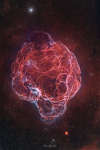 APOD: 2026 January 7 Б Simeis 147: The Spaghetti Nebula Supernova Remnant
7.01.2026
Its popular nickname is the Spaghetti Nebula. Officially cataloged as Simeis 147 and Sharpless 2-240, it is easy to get lost following the looping and twisting filaments of this intricate supernova remnant. Seen toward...
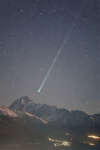 APOD: 2026 April 12 Б Comet R3 PanSTARRS Brightens
12.04.2026
Comet R3 is brightening rapidly -- will it survive? C/2025 R3 (PanSTARRS) has been slowly brightening and extending an ion tail since its discovery last year. This shedding mountain of dirty ice puts...
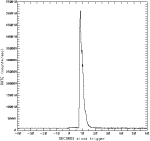 BATSE's Biggest Gamma Ray Burst (Yet)
1.10.1996
Something big exploded but astronomers have no idea what. On September 24th, the Burst and Transient Source Experiment (BATSE) onboard the orbiting Compton Gamma Ray Observatory recorded the most intense gamma ray burst in its five year history.
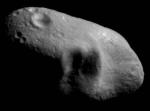 NEAR Shoemaker Views Eros
16.03.2000
Orbiting asteroid 433 Eros, 145 million miles from Earth, NASA's NEAR spacecraft has been returning stunning views as its year long mission of exploration gets underway. A mosaic of recent NEAR images recorded...
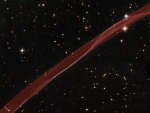 SN 1006: A Supernova Ribbon from Hubble
15.09.2008
What created this unusual space ribbon? Most assuredly, one of the most violent explosions ever witnessed by ancient humans. Back in the year 1006 AD, light reached Earth from a stellar explosion...
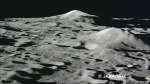 Kaguya Spacecraft Crashes into the Moon
29.06.2009
Japan's Kaguya spacecraft crashed into the Moon last week, as planned. Officially named the Selenological and Engineering Explorer (SELENE), the spacecraft was given the nickname Kaguya after the princess in the Japanese folklore story The Tale of the Bamboo Cutter.
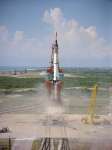 50 Years Ago: Freedom 7 Flies
5.05.2011
Fifty years ago, near the dawn of the space age, NASA controllers "lit the candle" and sent Mercury astronaut Alan Shepard arcing into space atop a Redstone rocket. His cramped space capsule was dubbed Freedom 7.
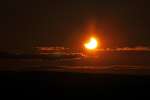 Midnight s Solar Eclipse
3.06.2011
On June 1, the shadow of the New Moon was cast across a land of the midnight Sun in this year's second partial solar eclipse. This picture of the geocentric celestial event above the Arctic Circle was taken near midnight from northern Finland's Kaunispää Hill in Lapland.
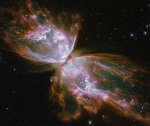 The Butterfly Nebula from Hubble
13.11.2011
Few butterflies have a wingspan this big. The bright clusters and nebulae of planet Earth's night sky are often named for flowers or insects, and NGC 6302 is no exception. With an estimated...
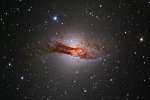 Centaurus A
4.04.2012
What's the closest active galaxy to planet Earth? That would be Centaurus A, only 11 million light-years distant. Spanning over 60,000 light-years, the peculiar elliptical galaxy is also known as NGC 5128.
|
January February March April May June July August September October |
|||||||||||||||||||||||||||||||||||||||||||||||||