
|
You entered: Earth's atmosphere
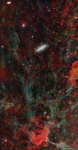 The Deep Sky Toward Andromeda
8.09.2021
What surrounds the Andromeda galaxy? Out in space, Andromeda (M31) is closely surrounded by several small satellite galaxies, and further out it is part of the Local Group of Galaxies -- of which our Milky Way galaxy is also a member.
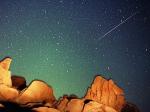 A Perseid Meteor
11.08.2004
The ongoing Perseid Meteor Shower should be at its strongest tonight and tomorrow night. Although meteors should be visible all night long, the best time to watch will be between 2:00 AM and dawn each night. In dark, moonless, predawn skies you may see dozens of meteors per hour.
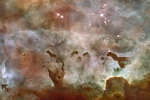 Dark Clouds of the Carina Nebula
28.05.2008
What dark forms lurk in the mists of the Carina Nebula? These ominous figures are actually molecular clouds, knots of molecular gas and dust so thick they have become opaque. In comparison, however, these clouds are typically much less dense than Earth's atmosphere.
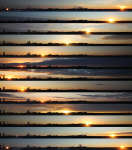 A Year of Sunrises
5.01.2022
Does the Sun always rise in the same direction? No. As the months change, the direction toward the rising Sun changes, too. The featured image shows the direction of sunrise every month during 2021 as seen from the city of Edmonton, Alberta, Canada.
 Moon behind Lava Fountain
4.09.2018
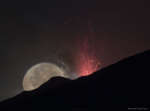
What's happened to the Moon? Nothing, but something has happened to the image of the Moon. The heat from a volcanic lava fountain in the foreground has warmed and made turbulent the air nearby, causing passing light to refract differently than usual.
 APOD: 2024 February 25 Б A Phoenix Aurora over Iceland
25.02.2024
All of the other aurora watchers had gone home. By 3:30 am in Iceland, on a quiet September night, much of that night's auroras had died down. Suddenly, unexpectedly, a new burst of particles streamed down from space, lighting up the Earth's atmosphere once again.
 Light Bridges on the Sun
22.05.2000
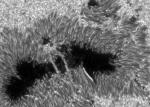
Bridges the length of a planet can form on the Sun in a matter of hours. Known as light bridges, these structures may form as large sunspot groups decay. Above, one of the sharpest photographs of the Sun ever taken shows two such light bridges that appeared late last month.
 Noctilucent Clouds and Aurora Over Scotland
19.08.2013
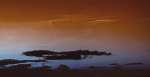
Why would the sky still glow after sunset? Besides stars and the band of our Milky Way galaxy, the sky might glow because it contains either noctilucent clouds or aurora. Rare individually, both are visible in the above time lapse movie taken over Caithness, Scotland, UK taken during a single night earlier this month.
 Southern Geminids
18.12.2009
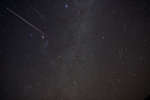
At least 34 meteors are included in this composite image as they rain through Australian skies during the annual Geminid Meteor shower. Dust particles strung out along the orbit of extinct comet Phaethon vaporize when they plow through planet Earth's atmosphere causing the impressive display.
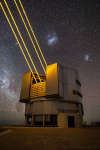 Firing Lasers to Tame the Sky
10.02.2021
Why do stars twinkle? Our atmosphere is to blame as pockets of slightly off-temperature air, in constant motion, distort the light paths from distant astronomical objects. Atmospheric turbulence is a problem for astronomers because it blurs the images of the sources they want to study.
|
January February March April May June July August September October |
|||||||||||||||||||||||||||||||||||||||||||||||||