
|
You entered: star system
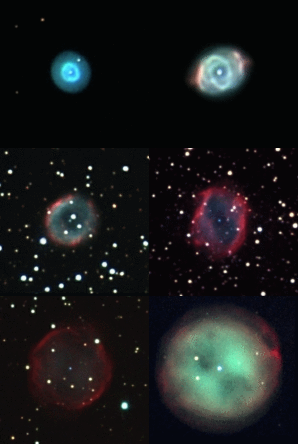 The Planetary Nebula Show
3.10.2001
What do the Owl, the Cat's Eye, the Ghost of Jupiter, and Saturn have in common? They're all planetary nebulae of course(!), glowing gaseous shrouds shed by dying sun-like stars as they run out of nuclear fuel.
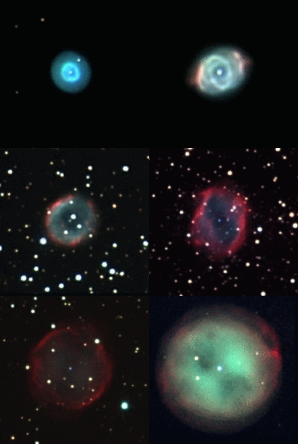 The Planetary Nebula Show
14.06.2003
What do the Owl, the Cat's Eye, the Ghost of Jupiter, and Saturn have in common? They're all planetary nebulae of course, glowing gaseous shrouds shed by dying sun-like stars as they run out of nuclear fuel.
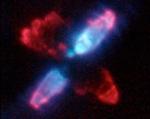 Shells in the Egg Nebula
26.06.1999
The Egg Nebula is taking a beating. Like a baby chick pecking its way out of an egg, the star in the center of the Egg Nebula is casting away shells of gas and dust as it slowly transforms itself into a white dwarf star.
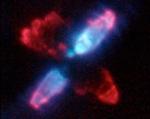 Shells in the Egg Nebula
20.05.1997
The Egg Nebula is taking a beating. Like a baby chick pecking its way out of an egg, the star in the center of the Egg Nebula is casting away shells of gas and dust as it slowly transforms itself into a white dwarf star.
 APOD: 2025 August 27 Б WISPIT 2b: Exoplanet Carves Gap in Birth Disk
27.08.2025
That yellow spot -- what is it? It's a young planet outside our Solar System. The featured image from the Very Large Telescope in Chile surprisingly captures a distant scene much like our own Solar System's birth, some 4.5 billion years ago.
 A Planet For Gliese 876
26.06.1998
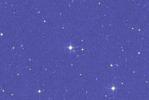
Centered in this unremarkable, 1/4 degree wide patch of sky in the constellation Aquarius is the star Gliese 876. Gliese 876 is smaller than the Sun, only about 1/3 as massive, and too faint to be seen without a telescope. But it is known to be one of the nearest stars, only 15 light-years distant.
 Beta Pictoris Revisited
28.11.1997
In the early 1980s, Beta Pictoris became one of the most important stars in the sky. Satellite and ground-based telescopic observations revealed the presence of a surrounding outer disk of material and an inner "clear" zone about the size of our solar system - strong evidence for the formation of planets.
 Milky Way and Zodiacal Light over Australian Pinnacles
23.10.2022
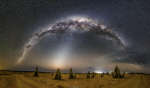
What strange world is this? Earth. In the foreground of the featured image are the Pinnacles, unusual rock spires in Nambung National Park in Western Australia. Made of ancient sea shells (limestone), how these human-sized picturesque spires formed remains a topic of research. The picturesque panorama was taken in 2017 September.
 Milky Way and Zodiacal Light over Australian Pinnacles
10.10.2017
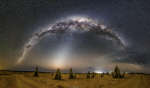
What strange world is this? Earth. In the foreground of the featured image are the Pinnacles, unusual rock spires in Nambung National Park in Western Australia. Made of ancient sea shells (limestone), how these human-sized picturesque spires formed remains a topic of research. The panorama was taken last month.
 NGC 2346: A Butterfly-Shaped Planetary Nebula
28.10.2001
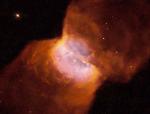
It may look like a butterfly, but it's bigger than our Solar System. NGC 2346 is a planetary nebula made of gas and dust that has evolved into a familiar shape. At the heart of the bipolar planetary nebula is a pair of close stars orbiting each other once every sixteen days.
|
January February March April May June July August September October |
|||||||||||||||||||||||||||||||||||||||||||||||||