
|
You entered: planet
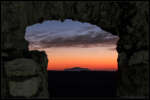 Venus and Mercury at Sunset
14.01.2015
Inner planets Venus and Mercury can never wander far from the Sun in Earth's sky. This week you've probably seen them both gathered near the western horizon just after sunset, a close conjunction of bright celestial beacons in the fading twilight.
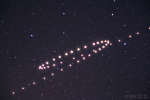 Mars in the Loop
9.08.2012
This composite of images spaced some 5 to 7 days apart from late October 2011 (top right) through early July 2012 (bottom left), traces the retrograde motion of ruddy-colored Mars through planet Earth's night sky.
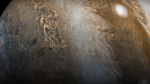 Perijove 11: Passing Jupiter
28.08.2022
Here comes Jupiter! NASA's robotic spacecraft Juno is continuing on its highly-elongated orbits around our Solar System's largest planet. The featured video is from perijove 11 in early 2018, the eleventh time Juno has passed near Jupiter since it arrived in mid-2016.
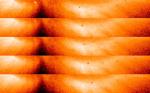 X-ray Transit of Mercury
2.07.1998
This sequence of false color X-ray images captures a rare event - the passage or transit of planet Mercury in front of the Sun. Mercury's small disk is silhouetted against the bright background of X-rays from the hot Solar Corona.
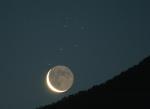 Old Moon and Sister Stars
29.06.2006
An old crescent Moon shares the eastern sky over Menton, France with the sister stars of the Pleiades cluster in this early morning skyscape recorded just last Friday, June 23rd. (Bright Venus was also...
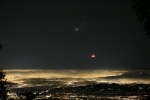 A Happy Sky Over Los Angeles
3.12.2008
Sunday, the sky seemed to smile over much of planet Earth. Visible the world over was an unusual superposition of our Moon and the planets Venus and Jupiter. Pictures taken at the right time...
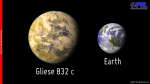 Gliese 832c: The Closest Potentially Habitable Exoplanet
9.07.2014
This planet is only 16 light years away -- could it harbor life? Recently discovered exoplanet Gliese 832c has been found in a close orbit around a star that is less bright than our Sun.
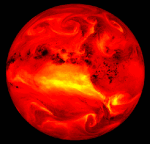 The Water Vapor Channel
12.10.1996
What alien planet's bizarre landscape lurks below these fiery-looking clouds? It's only Planet Earth, of course -- as seen on the Water Vapor Channel. Hourly, images like this one (shown in false color) are brought to you by the orbiting GOES 8 satellite's multi-channel imager.
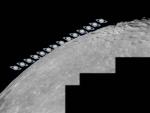 Eclipsing the Rings
16.03.2007
The March 3rd total lunar eclipse was widely viewed by denizens of planet Earth. But only a day before, well placed observers could also watch a lunar occultation of Saturn as the planet passed behind the nearly Full Moon.
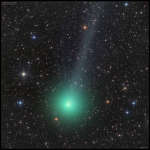 This Comet Lovejoy
24.12.2014
Comet Lovejoy, C/2014 Q2, is framed like a cosmic Christmas tree with starry decorations in this colorful telescopic portrait, snapped on December 16th. Its lovely coma is tinted green by diatomic C2 gas fluorescing in sunlight.
|
January February March April May June July August September October |
|||||||||||||||||||||||||||||||||||||||||||||||||