
|
You entered: Earth orbit
 APOD: 2024 August 4 Б Gaia: Here Comes the Sun
4.08.2024
What would it look like to return home from outside our galaxy? Although designed to answer greater questions, data from ESA's robotic Gaia mission is helping to provide a uniquely modern perspective on humanity's place in the universe.
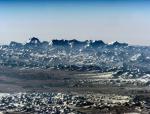 Himalayan Horizon From Space
26.12.2001
This stunning aerial view shows the rugged snow covered peaks of a Himalayan mountain range in Nepal. The seventh-highest peak on the planet, Dhaulagiri, is the high point on the horizon at the left while in the foreground lies the southern Tibetan Plateau of China.
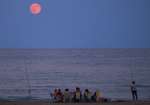 Alicante Beach Moonrise
19.07.2014
In this beach and skyscape from Alicante, Spain, July's Full Moon shines in the dark blue twilight, its reflection coloring the Mediterranean waters. Near the horizon, the moonlight is reddened by its long...
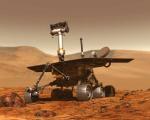 Name This Martian Robot
26.11.2002
NASA will launch two robots to Mars next year and you can help name them. The Mars Exploration Rovers are scheduled for launch on or near this coming June, when Mars and Earth are relatively close in their orbits.
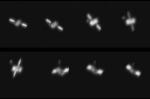 Compton Returns
7.03.2001
On 2000 June 4, the 17-ton Compton Gamma-Ray Observatory returned to Earth after 9 years in orbit -- ending its remarkable voyage of discovery. The massive, bus-sized spacecraft carried an unprecedented array of gamma-ray detectors which explored the bizarre, high-energy universe of solar flares, black holes, pulsars, supernovae, active galaxies, and gamma-ray bursts.
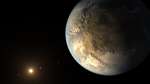 Earth size Kepler 186f
19.04.2014
Planet Kepler-186f is the first known Earth-size planet to lie within the habitable zone of a star beyond the Sun. Discovered using data from the prolific planet-hunting Kepler spacecraft, the distant world orbits...
 Kepler Discovers How Planets Move
13.09.1997
Johannes Kepler used simple mathematics to describe how planets move. Kepler was an assistant to the most accurate astronomical observer of the time, Tycho Brahe. Kepler was able to use Brahe's data...
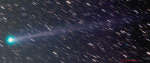 Comet McNaught Becoming Visible to the Unaided Eye
7.06.2010
A new comet is brightening and is now expected to become visible to the unaided eye later this month. C/2009 R1 (McNaught) is already showing an impressive tail and is currently visible through binoculars.
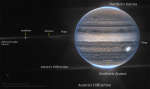 Jupiter from the Webb Space Telescope
30.08.2022
This new view of Jupiter is illuminating. High-resolution infrared images of Jupiter from the new James Webb Space Telescope (Webb) reveal, for example, previously unknown differences between high-floating bright clouds -- including the Great Red Spot -- and low-lying dark clouds.
 Kepler Discovers How Planets Move
31.08.1996
Johannes Kepler used simple mathematics to describe how planets move. Kepler was an assistant to the most accurate astronomical observer of the time, Tycho Brahe. Kepler was able to use Brahe's data...
|
January February March April May June July August September October |
|||||||||||||||||||||||||||||||||||||||||||||||||