
|
You entered: crater
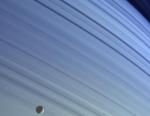 Blue Saturn
11.02.2005
Serene blue hues highlight this view of Saturn's northern hemisphere from the Cassini spacecraft. The image has been adjusted to approximate the natural blue color of visible sunlight scattered by the gas giant's upper atmosphere.
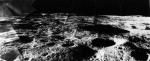 Surveyor Hops
12.11.2005
This panorama of the cratered lunar surface was constructed from images returned by the US Surveyor 6 lander. Surveyor 6 was not the first spacecraft to accomplish a soft landing on the Moon ... but it was the first to land and then lift off again!
 Surveyor Hops
22.11.1997
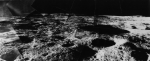
This panorama of the cratered lunar surface was constructed from images returned by the US Surveyor 6 lander. Surveyor 6 was not the first spacecraft to accomplish a soft landing on the Moon ... but it was the first to land and then lift off again!
 Surveyor Hops
30.11.2002
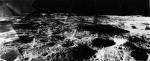
This panorama of the cratered lunar surface was constructed from images returned by the US Surveyor 6 lander. Surveyor 6 was not the first spacecraft to accomplish a soft landing on the Moon ... but it was the first to land and then lift off again!
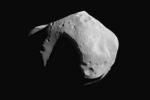 NEAR Mathilde
30.06.1997
Hey Earth, look what I found! On the way to visiting the asteroid 433 Eros in February 1999, the Near Earth Asteroid Rendezvous (NEAR) spacecraft flew right by another asteroid: 253 Mathilde last Friday. Shown above is one picture from the encounter.
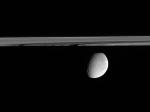 Slightly Beneath Saturns Ring Plane
5.04.2006
When orbiting Saturn, be sure to watch for breathtaking superpositions of moons, rings, and shadows. One such picturesque vista was visible recently to the robot Cassini spacecraft now orbiting Saturn. In late February, Cassini captured a Rhea, the second largest moon of Saturn, while looking up from slightly beneath Saturn's expansive ring plane.
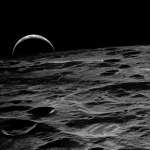 Apollo 14 Heads for Home
1.02.2020
When leaving lunar orbit in February 1971, the crew of Apollo 14 watched this Earthrise from their command module Kittyhawk. With Earth's sunlit crescent just peaking over the lunar horizon, the cratered terrain in the foreground is along the lunar farside.
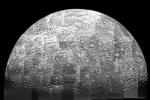 Outbound from Mercury
16.07.2002
After just passing Mercury, the robot spacecraft Mariner 10 looked back. The above picture is what it saw. Mercury, the closest planet to the Sun, is heavily cratered much like Earth's Moon.
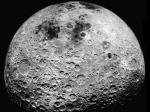 The Far Side of the Moon
25.02.2007
Does this moon look familiar? Possibly not, even though it is Earth's Moon. Locked in synchronous rotation, the Moon always presents its well-known near side to Earth. But from lunar orbit, Apollo astronauts also grew to know the Moon's far side.
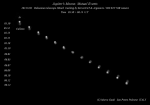 Io and Callisto Mutual Event
25.11.2014
A 24 minute sequence from top to bottom, this intriguing series of telescopic frames tracks the occultation of Io by Callisto, two of Jupiter's Galilean moons, from San Pietro Polesine, Italy, planet Earth. A challenging observational project using a small telescope, the two contrasting Jovian worlds are both slightly larger than Earth's Moon.
|
January February March April May June July August September October |
|||||||||||||||||||||||||||||||||||||||||||||||||