
|
You entered: Milky Way
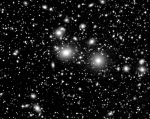 The Perseus Cluster of Galaxies
15.08.1998
Here is one of the largest objects that anyone will ever see on the sky. Each of the fuzzy blobs in the above picture is a galaxy, together making up the Perseus Cluster, one of the closest clusters of galaxies.
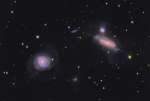 NGC 7771 Galaxy Group
29.08.2009
Slide your cursor over the image to identify three members of this intriguing gathering of galaxies. Known as the NGC 7771 Group, they lie almost 200 million light-years away toward the high flying constellation Pegasus.
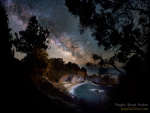 Galaxy Cove Vista
7.05.2013
To see a vista like this takes patience, hiking, and a camera. Patience was needed in searching out just the right place and waiting for just the right time. A short hike was needed to reach this rugged perch above a secluded cove in Julia Pfeiffer Burns State Park in California, USA.
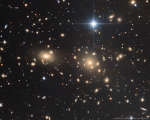 The Coma Cluster of Galaxies
26.03.2018
Almost every object in the above photograph is a galaxy. The Coma Cluster of Galaxies pictured here is one of the densest clusters known - it contains thousands of galaxies. Each of these galaxies houses billions of stars - just as our own Milky Way Galaxy does.
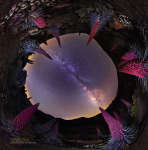 Planet of the Tajinastes
25.05.2019
What bizarre planet are these alien creatures from? It's only planet Earth, of course. The planet's home galaxy the Milky Way stretches across a dark sky in the panoramic, fisheye all-sky projection composed with a wide lens. But the imposing forms gazing skyward probably look strange to many denizens of Earth.
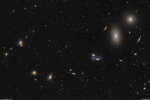 Markarians Chain of Galaxies
9.06.2009
Across the heart of the Virgo Cluster of Galaxies lies a striking string of galaxies known as Markarian's Chain. The chain, pictured above, is highlighted on the upper right with two large but featureless lenticular galaxies, M84 and M86. Prominent to their lower left is a pair of interacting galaxies known as The Eyes.
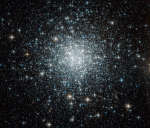 Globular Star Cluster NGC 6934
9.10.2010
Globlular star clusters roam the halo of our Milky Way Galaxy. Gravitationally bound, these spherical groupings of typically several hundred thousand stars are ancient, older than the stars of the galactic disk. In fact...
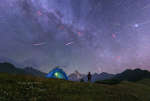 Meteors over Four Girl Mountains
13.12.2016
On some nights it rains meteors. Peaking over the next two nights, asteroid dust is expected to rain down on Earth during the annual Geminids meteor shower. This year, unfortunately, fainter Geminids will be harder to see because of the brightness of the Long Nights Full Moon, which occurs Wednesday.
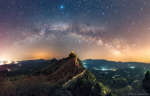 The Summer Triangle over the Great Wall
3.07.2017
Have you ever seen the Summer Triangle? The bright stars Vega, Deneb, and Altair form a large triangle on the sky that can be seen rising in the northern spring during the morning, and rising in the northern fall during the evening.
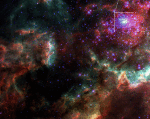 In the Center of 30 Doradus
4.10.1997
In the center of 30 Doradus lies a huge cluster of the largest, hottest, most massive stars known. The center of this cluster, known as R136, is boxed in the upper right portion of the above picture.
|
January February March April May June July August September October |
|||||||||||||||||||||||||||||||||||||||||||||||||