
|
You entered: star cluster
 Yuri s Planet
12.04.2012
On another April 12th, in 1961, Soviet cosmonaut Yuri Alexseyevich Gagarin became the first human to see planet Earth from space. Commenting on his view from orbit he reported, "The sky is very dark; the Earth is bluish. Everything is seen very clearly". To celebrate, consider this recent image from the orbiting International Space Station.
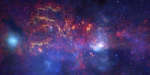 Great Observatories Explore Galactic Center
11.11.2009
Where can a telescope take you? Four hundred years ago, a telescope took Galileo to the Moon to discover craters, to Saturn to discover rings, to Jupiter to discover moons, to Venus to discover phases, and to the Sun to discover spots.
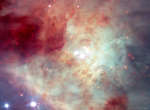 Fast Stars and Rogue Planets in the Orion Nebula
21.03.2017
Start with the constellation of Orion. Below Orion's belt is a fuzzy area known as the Great Nebula of Orion. In this nebula is a bright star cluster known as the Trapezium, marked by four bright stars near the image center.
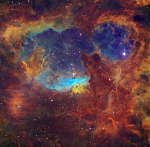 Massive Stars in NGC 6357
5.02.2016
Massive stars lie within NGC 6357, an expansive emission nebula complex some 6,500 light-years away toward the tail of the constellation Scorpius. In fact, positioned near center in this ground-based close-up...
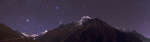 Himalayan Skyscape
5.12.2009
Capella, alpha star of the constellation Auriga, rises over Mt. Everest in this panoramic view of the top of the world at night. The scene was recorded in late November near Namche Bazar, Nepal, gateway to the Himalayan mountain range.
 Blue Stagglers in Globular Clusters
4.11.1997
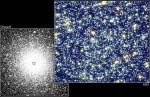
This old dog is doing new tricks. On the left is ancient globular cluster 47 Tucanae which formed many billions of years ago. On the right is a closeup of its dense stellar center by the Hubble Space Telescope, released last week.
 Regulus and the Red Planet
10.06.2010
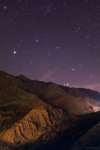
Leo's royal star Regulus and red planet Mars appear in a colorful pairing just above the horizon in this starry skyscape. The photo was taken on June 4th from Oraman, a mountainous region of Kurdistan in western Iran near the border with Iraq.
 Globular Cluster 47 Tucanae
22.04.2001
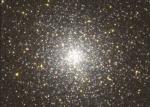
Stars come in bunches. Of the over 200 globular star clusters that orbit the center of our Milky Way Galaxy, 47 Tucanae is the second brightest globular cluster (behind Omega Centauri). Known to some affectionately as 47 Tuc or NGC 104, it is only visible from the Southern Hemisphere.
 Globular Cluster 47 Tucanae
19.09.1997
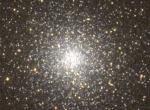
Stars come in bunches. Of the over 200 globular star clusters that orbit the center of our Milky Way Galaxy, 47 Tucanae is the second brightest globular cluster (behind Omega Centauri). Known to some affectionately as 47 Tuc or NGC 104, it is only visible from the Southern Hemisphere.
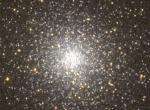 Globular Cluster 47 Tucanae
7.11.1998
Stars come in bunches. Of the over 200 globular star clusters that orbit the center of our Milky Way Galaxy, 47 Tucanae is the second brightest globular cluster (behind Omega Centauri). Known to some affectionately as 47 Tuc or NGC 104, it is only visible from the Southern
|
January February March April May June July August September October |
|||||||||||||||||||||||||||||||||||||||||||||||||