
|
You entered: Earth orbit
 At Last GLAST
11.06.2018
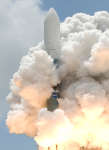
Rising through a billowing cloud of smoke, a long time ago from a planet very very close by, this Delta II rocket left Cape Canaveral Air Force Station's launch pad 17-B at 12:05 pm EDT on June 11, 2008. Snug in the payload section was GLAST, the Gamma-ray Large Area Space Telescope.
 Portrait of an Infant Solar System
7.06.2002
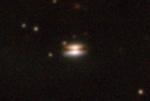
This infant solar system was discovered posing along the lonely outskirts of the Rho Ophiuchi dark cloud, a star forming region 500 light-years from Earth. Enlarged in this infrared false-color portrait from the European...
 Looking Sideways from the Parker Solar Probe
9.12.2019
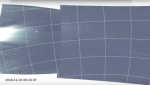
Everybody sees the Sun. Nobody's been there. Starting in 2018 though, NASA launched the robotic Parker Solar Probe (PSP) to investigate regions near to the Sun for the first time. The PSP's looping orbit brings it yet closer to the Sun each time around -- every few months.
 A Martian Eclipse: Phobos Crosses the Sun
9.05.2022
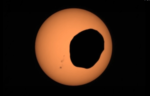
What's that passing in front of the Sun? It looks like a moon, but it can't be Earth's Moon, because it isn't round. It's the Martian moon Phobos. The featured video was taken from the surface of Mars a month ago by the Perseverance rover.
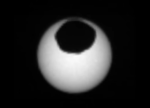 Martian Moon Phobos Crosses the Sun
10.04.2019
What's that passing in front of the Sun? It looks like a moon, but it can't be Earth's Moon, because it isn't round. It's the Martian moon Phobos. The featured video was taken from the surface of Mars late last month by the Curiosity rover.
 Astronaut Exploring: An Apollo 15 Panorama
11.11.2018
What would it be like to explore the Moon? NASA's Apollo missions gave humans just this chance in the late 1960s and early 1970s. In particular, the Apollo 15 mission was dedicated to better understanding the surface of the Moon by exploring mountains, valleys, maria, and highlands.
 An Apollo 15 Panorama: Astronaut Exploring
30.11.2008
What would it be like to explore the Moon? NASA's Apollo missions gave humans just this chance in the late 1960s and early 1970s. In particular, the Apollo 15 mission was dedicated to better understanding the surface of the Moon by exploring mountains, valleys, maria, and highlands.
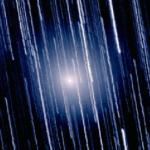 Tempel Tuttle: The Leonid Comet
16.11.2002
Star trails streak this composite time exposure of comet Tempel-Tuttle recorded by Tim Puckett on January 26, 1998. Then passing through the inner solar system on its 33 year orbit around the Sun, Tempel-Tuttle brightened unexpectedly, but binoculars or small telescopes were still required to visually observe it.
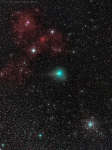 A Charioteer s Comet
1.03.2019
Still racing across planet Earth's night skies, Comet Iwamoto (C/2018 Y1) shares this pretty telescopic field of view with stars and nebulae of northern constellation Auriga, the Charioteer. Captured on February 27, Iwamoto's greenish coma and faint tail appear between a complex of reddish emission nebulae and open star cluster M36 (bottom right).
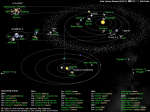 Humanity Explores the Solar System
30.04.2013
What spacecraft is humanity currently using to explore our Solar System? Presently, every inner planet has at least one robotic explorer, while several others are monitoring our Sun, some are mapping Earth's Moon, a few are chasing asteroids and comets, one is orbiting Saturn, and several are even heading out into deep space.
|
January February March April May June July August September October |
|||||||||||||||||||||||||||||||||||||||||||||||||