
|
You entered: Earth orbit
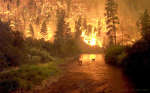 Fire on Earth
26.08.2018
Sometimes, regions of planet Earth light up with fire. Since fire is the rapid acquisition of oxygen, and since oxygen is a key indicator of life, fire on any planet would be an indicator of life on that planet.
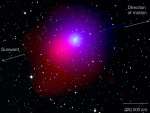 The Swift View of Comet Lulin
21.02.2009
Now growing brighter, Comet Lulin is headed for its closest approach to planet Earth early next week. But the comet's greenish glow, familiar to earthbound skygazers, is replaced by false colors in this premier view from the orbiting Swift satellite.
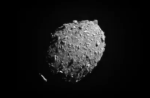 DART: Impact on Asteroid Dimorphos
27.09.2022
Could humanity deflect an asteroid headed for Earth? Yes. Deadly impacts from large asteroids have happened before in Earth's past, sometimes causing mass extinctions of life. To help protect our Earth from some...
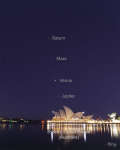 APOD: 2026 February 24 Б Planet Parade over Sydney Opera House
24.02.2026
Look up this week and see a whole bunch of planets. Just after sunset, looking west (mostly), planets Mercury, Venus, Saturn, and Jupiter will all be visible to the unaided eye simultaneously. If you have a telescope, planets Uranus and Neptune can also be seen.
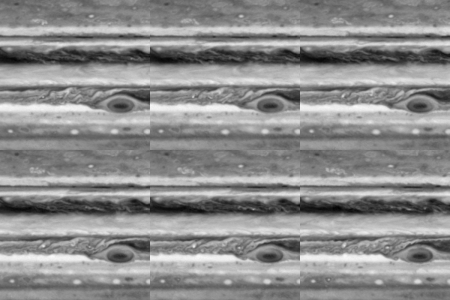 Cassini At Jupiter: Red Spot Movie
23.11.2000
Everything is big on Jupiter, the solar system's reigning gas giant. For example, Jupiter's Great Red Spot is a hurricane-like storm system at least twice the diameter of planet Earth. Approaching Jupiter...
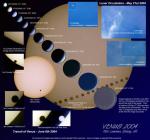 A Rare Annular Venusian Solar Eclipse
15.06.2004
An unusual type of solar eclipse occurred last week. Usually it is the Earth's Moon that eclipses the Sun. Last week, for the first time in over 100 years, the planet Venus took a turn.
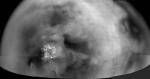 Titan Through the Haze
26.10.2004
What are these surface features on Titan? This planet-sized moon of Saturn had much of its south polar surface imaged during an initial flyby by the Saturn-orbiting Cassini spacecraft back in early July.
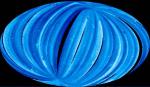 EUVE Sky Map
31.01.2002
The stars beyond the Sun and the distant galaxies should be undetectable at extreme ultraviolet wavelengths. At least that was the conventional wisdom when it was first realized that the space between the stars is filled with hydrogen, a strong absorber of extreme ultraviolet light.
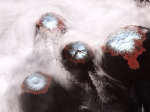 Islands of Four Mountains from Above
22.06.2010
Our Earth is covered by volcanoes. Volcanoes are breaks in the Earth's cool surface where hot liquid rock from the interior comes out -- sometimes suddenly. In the above image from the ASTER camera...
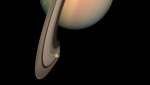 Cassini Approaches Saturn
11.09.2017
What would it look like to approach Saturn in a spaceship? One doesn't have to just imagine -- the Cassini spacecraft did just this in 2004, recording thousands of images along the way, and hundreds of thousands more since entering orbit.
|
January February March April May June July August September October |
|||||||||||||||||||||||||||||||||||||||||||||||||