
|
You entered: cosmological constant
 Rumors of a Strange Universe
2.03.1998
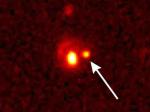
In a meeting in California two weeks ago, unpublished results were presented indicating that most of the energy in our universe is not in stars or galaxies but is tied to space itself. In the language of cosmologists, a large cosmological constant is directly implied by new distant supernovae observations.
 Signals of a Strange Universe
29.03.2009
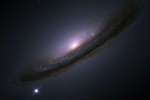
Eleven years ago results were first presented indicating that most of the energy in our universe is not in stars or galaxies but is tied to space itself. In the language of cosmologists, a large cosmological constant is directly implied by new distant supernovae observations.
 Rumors of a Strange Universe
24.12.2006
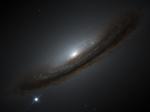
Eight years ago results were first presented indicating that most of the energy in our universe is not in stars or galaxies but is tied to space itself. In the language of cosmologists, a large cosmological constant is directly implied by new distant supernovae observations.
 Nobels for a Strange Universe
9.10.2011
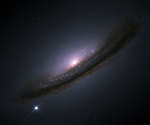
Thirteen years ago results were first presented indicating that most of the energy in our universe is not in stars or galaxies but is tied to space itself. In the language of cosmologists, a large cosmological constant is directly implied by new distant supernova observations.
 Rumors of a Strange Universe
2.12.2001
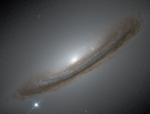
Three years ago results were first presented indicating that most of the energy in our universe is not in stars or galaxies but is tied to space itself. In the language of cosmologists, a large cosmological constant is directly implied by new distant supernovae observations.
 Rumors of a Dark Universe
4.08.2019
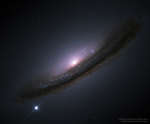
Twenty-one years ago results were first presented indicating that most of the energy in our universe is not in stars or galaxies but is tied to space itself. In the language of cosmologists, a large cosmological constant -- dark energy -- was directly implied by new distant supernova observations.
 APOD: 2026 April 23 Б Large Scale Structure of the Universe
23.04.2026
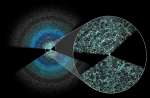
This is a map of the universe. The Dark Energy Spectroscopic Instrument (DESI) at Kitt Peak National Observatory, Arizona, has finished its five-year survey. It observed more than 47 million galaxies and quasars and created a 3D map centered on the Earth.
 Oklo: Ancient African Nuclear Reactors
16.10.2002
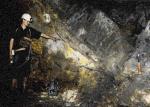
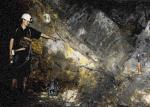
The remnants of nuclear reactors nearly two billion years old were found in the 1970s in Africa. These reactors are thought to have occurred naturally. No natural reactors exist today, as the relative density of fissionable uranium has now decayed below that needed for a sustainable reaction.
 Oklo: Ancient African Nuclear Reactors
20.02.2005
The remnants of nuclear reactors nearly two billion years old were found in the 1970s in Africa. These reactors are thought to have occurred naturally. No natural reactors exist today, as the relative density of fissile uranium has now decayed below that needed for a sustainable reaction.
 Oklo: Ancient African Nuclear Reactors
12.09.2010
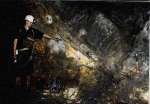
The remnants of nuclear reactors nearly two billion years old were found in the 1970s in Africa. These reactors are thought to have occurred naturally. No natural reactors exist today, as the relative density of fissile uranium has now decayed below that needed for a sustainable reaction.
|
January February March April May June July August September |
|||||||||||||||||||||||||||||||||||||||||||||||||