
|
You entered: spacecraft
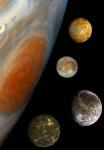 Jupiter And Family
17.11.2000
This composite image features classic portraits of members of one of the Solar System's most prominent families - Jupiter and its four large "Galilean" moons. Starting from the top the moons are Io, Europa, Ganymede, and Callisto. The top-to-bottom order is also the order of increasing distance from Jupiter.
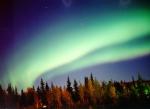 The Secret of the Black Aurora
31.12.2001
What causes black aurora? These gaps in normal bright aurora are frequently recorded but rarely questioned. Recent research using data from four Cluster spacecraft orbiting the Earth has now likely found the secret: black auroras are actually anti-auroras.
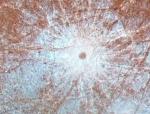 Pwyll: Icy Crater of Europa
13.04.2002
The impact crater Pwyll (a name from Celtic Mythology) is thought to represent one of the youngest features on the surface of Jupiter's moon Europa. A combination of color and high resolution black...
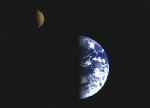 The Earth-Moon System
29.06.1995
A double planet? From 4 million miles away on December 16, 1992, NASA's robot spacecraft Galileo took this picture of the Earth-moon system. The bright, sunlit half of the Earth contrasts strongly with the darker subdued colors of the moon. Our moon is one of the largest moons in the solar system.
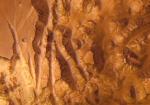 Valles Marineris from Mars Express
23.01.2004
Looking down from orbit on January 14, ESA's Mars Express spacecraft scanned a 1700 by 65 kilometer swath across Valles Marineris - the Grand Canyon of Mars - with its remarkable High Resolution Stereo Camera.
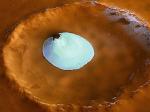 Water Ice in a Maritan Crater
20.07.2005
What lies on the floor of this Martian crater? A frozen patch of water ice. The robotic Mars Express spacecraft took the above image in early February. The ice pocket was found in a 35-kilometer wide crater that resides 70 degrees north of the Martian equator.
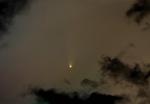 Comet McNaught Heads for the Sun
4.01.2007
Early morning risers with a clear and unobstructed eastern horizon can enjoy the sight of Comet McNaught (C/2006 P1) in dawn skies over the next few days. Discovered in August by R. H. McNaught...
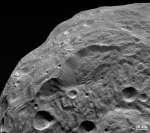 A Landslide on Asteroid Vesta
28.11.2011
Asteroid Vesta is home to some of the most impressive cliffs in the Solar System. Pictured above near the image center is a very deep cliff running about 20 kilometers from top to bottom. The image was taken by the robotic Dawn spacecraft that began orbiting the 500-kilometer space rock earlier this year.
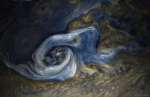 Juno Spots a Complex Storm on Jupiter
27.11.2017
Some storms on Jupiter are quite complex. The swirling storm was captured late last month by the NASA's robotic Juno spacecraft currently orbiting the Solar System's largest planet. The featured image spans about 30,000 kilometers, making this storm system just about as wide as planet Earth.
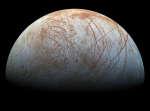 Galileo's Europa
14.01.2022
Looping through the Jovian system in the late 1990s, the Galileo spacecraft recorded stunning views of Europa and uncovered evidence that the moon's icy surface likely hides a deep, global ocean. Galileo...
|
January February March April May June July August September October |
|||||||||||||||||||||||||||||||||||||||||||||||||