
|
You entered: Io
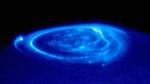 A Close Up of Aurora on Jupiter
19.12.2000
Jupiter has aurorae. Like Earth, the magnetic field of the gas giant funnels charged particles released from the Sun onto the poles. As these particles strike the atmosphere, electrons are temporarily knocked away from existing gas molecules. Electric force attracts these electrons back. As the electrons recombine to remake neutral molecules, auroral light is emitted.
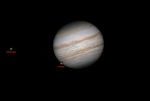 Jupiter Rotates as Moons Orbit
25.10.2022
Jupiter and its moons move like our Sun and its planets. Similarly, Jupiter spins while its moons circle around. JupiterБs rotation can be observed by tracking circulating dark belts and light zones. The Great Red Spot, the largest storm known, rotates to become visible after about 15 seconds in the 48-second time lapse video.
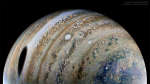 Moon Shadow on Jupiter
27.04.2022
What is that large dark spot on Jupiter? It's the shadow of Io, one of Jupiter's largest moons. When Jupiter's moons cross between the Jovian giant and the Sun, they created shadows just like when the Earth's moon crosses between the Earth and the Sun.
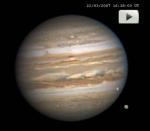 Jupiter Moon Movie
29.03.2007
South is toward the top in this frame from a stunning movie featuring Jupiter and moons recorded last Thursday from the Central Coast of New South Wales, Australia. In fact, three jovian moons and two red spots are ultimately seen in the full video as they glide around the solar system's ruling gas giant.
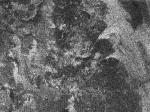 A Radar View of Titan
24.11.2004
Where are Titan's craters? Throughout our Solar System's five billion-year history, dangerous rocks and chunks of ice have continually slammed into planets and moons - usually creating numerous long lasting impact craters. When the robot spacecraft Cassini swooped past Saturn's moon Titan last month, however, radar images showed few craters.
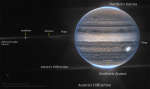 Jupiter from the Webb Space Telescope
30.08.2022
This new view of Jupiter is illuminating. High-resolution infrared images of Jupiter from the new James Webb Space Telescope (Webb) reveal, for example, previously unknown differences between high-floating bright clouds -- including the Great Red Spot -- and low-lying dark clouds.
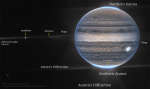 APOD: 2026 January 18 Б Jupiter from the Webb Space Telescope
18.01.2026
This infrared view of Jupiter by Webb is illuminating. High-resolution infrared images of Jupiter from the James Webb Space Telescope (Webb) reveal, for example, differences between high-floating bright clouds -- including the Great Red Spot -- and low-lying dark clouds.
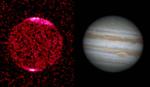 Jupiter s Great X Ray Spot
1.03.2002
The Solar System's largest planet, gas giant Jupiter, is famous for its swirling Great Red Spot. In the right hand panel above, the familiar giant planet with storm system and cloud bands is shown in an optical image from the passing Cassini spacecraft.
 APOD: 2020 September 2 Б Jupiter and the Moons
2.09.2020
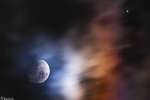
How many moons do you see? Many people would say one, referring to the Earth's Moon, prominent on the lower left. But take a closer look at the object on the upper right.
 Triple Transit and Mutual Events
21.08.2021
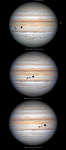
These three panels feature the Solar System's ruling gas giant Jupiter on August 15 as seen from Cebu City, Phillipines, planet Earth. On that date the well-timed telescopic views detail some remarkable performances, transits and mutual events, by Jupiter's Galilean moons.
|
January February March April May June July August September October |
|||||||||||||||||||||||||||||||||||||||||||||||||