
|
You entered: Moon
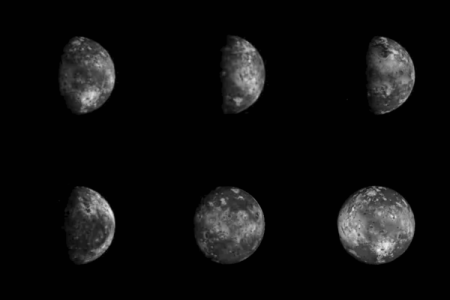 Io Rotating
31.12.1996
Are any volcanoes on Io currently erupting? To help answer this, scientists instructed the robot spacecraft Galileo to take hourly pictures of this moon of Jupiter prior to its most recent encounter. The most obvious changes in Io are due to the changing amount of sunlight reflected from the moon to the spacecraft.
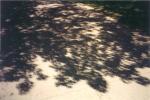 Eclipse In The Shade
13.08.1999
Near the shadow of the moon under a shady tree, dozens of images of a 1994 solar eclipse in progress are visible in this striking picture from the campus of Northwestern University in Evanston, Illinois. What creates the multiple images?
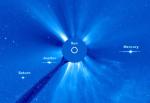 Planets In The Sun
5.05.2000
Today, all five naked-eye planets (Mercury, Venus, Mars, Jupiter, Saturn) plus the Moon and the Sun will at least approximately line-up. As viewed from planet Earth, they will be clustered within about 26 degrees, the closest alignment for all these celestial bodies since February 1962, when there was a solar eclipse!
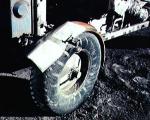 Lunar Dust and Duct Tape
27.03.1998
Why is the Moon dusty? On Earth, rocks are weathered by wind and water, creating soil and sand. On the Moon, the long history of micrometeorite bombardment has blasted away at the rocky surface creating a layer of powdery lunar soil or regolith. This lunar regolith could be a scientific and industrial bonanza.
 A Partial Solar Eclipse over Texas
13.09.2015
It was a typical Texas sunset except that most of the Sun was missing. The location of the missing piece of the Sun was not a mystery -- it was behind the Moon. Featured here...
 Reunion Island Eclipse
3.09.2016
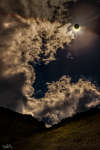
The New Moon's dark shadow crossed planet Earth on September 1. In silhouette the Moon didn't quite cover the Sun though, creating an an annular solar eclipse. The shadow's narrow central path was about 100 kilometers wide at maximum eclipse.
 Ganymede s Shadow
25.03.2017
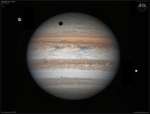
Approaching opposition early next month, Jupiter is offering some of its best telescopic views from planet Earth. On March 17, this impressively sharp image of the solar system's ruling gas giant was taken from a remote observatory in Chile.
 Partial Eclipse over Beijing
11.01.2019
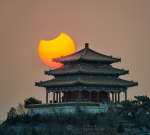
On January 6 the New Moon rose in silhouette with the Sun seen from northeastern Asia. Near maximum, the dramatic partial solar eclipse is captured in this telephoto view through hazy skies. In the foreground, the hill top Wanchun pavilion overlooking central Beijing's popular Forbidden City hosts eclipse-watching early morning risers.
 Apollo 11: Catching Some Sun
29.07.2023
Bright sunlight glints as long dark shadows mark this image of the surface of the Moon. It was taken fifty-four years ago, July 20, 1969, by Apollo 11 astronaut Neil Armstrong, the first to walk on the lunar surface. Pictured is the mission's lunar module, the Eagle, and spacesuited lunar module pilot Buzz Aldrin.
 Earthrise: A Video Reconstruction
23.12.2018
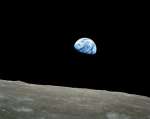
About 12 seconds into this video, something unusual happens. The Earth begins to rise. Never seen by humans before, the rise of the Earth over the limb of the Moon occurred 50 years ago tomorrow and surprised and amazed the crew of Apollo 8.
|
January February March April May June July August September October |
|||||||||||||||||||||||||||||||||||||||||||||||||