
|
You entered: ring
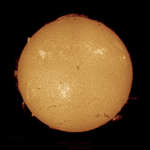 Perihelion Sun 2023
14.01.2023
Perihelion for 2023, Earth's closest approach to the Sun, was on January 4 at 16:17 UTC. That was less than 24 hours after this sharp image of the Sun's disk was recorded with telescope and H-alpha filter from Sidney, Australia, planet Earth.
 Five Meters over Mars
10.08.2023
On mission sol 872 (Earth date August 3) Ingenuity snapped this sharp image on its 54th flight above the surface of the Red Planet. During the flight the Mars Helicopter hovered about 5 meters, or just over 16 feet, above the Jezero crater floor.
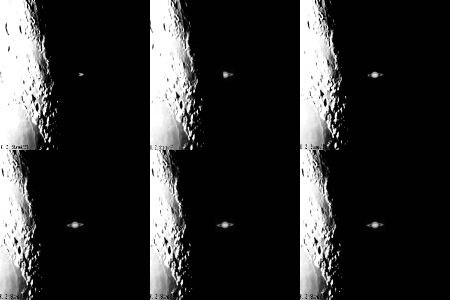 Moon Occults Saturn
8.09.2001
On September 18, 1997, many stargazers in the U. S. were able to watch a lovely early morning lunar occultation as a bright Moon passed in front of Saturn. Using a 1.2 meter reflector, astronomer Kris Stanek had an excellent view of this dream-like event from the Whipple Observatory atop Arizona's Mount Hopkins.
 Looking Into an Io Volcano
27.03.2002
What would it look like to peer into one of the volcanoes currently active on Jupiter's moon Io? The caldera of Tupan Patera, named after a Brazilian thunder god, reveals itself...
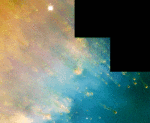 At the Edge of the Helix
22.04.1996
While exploring the inner edge of the Helix Nebula with the Hubble Space Telescope's Wide Field Planetary Camera 2, astronomers were able to produce this striking image - rich in details of an exotic environment.
 NGC 3242: The 'Ghost of Jupiter' Planetary Nebula
31.03.1997
It's a weed, it's Jupiter, no it's - actually planetary nebula NGC 3242. After a star like our Sun completes fusion in its core, it throws off its outer layers it a striking display called a planetary nebula.
 At the Edge of the Helix
20.07.1997
While exploring the inner edge of the Helix Nebula with the Hubble Space Telescope's Wide Field Planetary Camera 2, astronomers were able to produce this striking image - rich in details of an exotic environment.
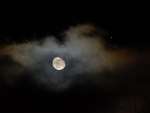 Moon and Mars Tonight
23.12.2007
The Full Moon and a brilliant, ruddy Mars will share the sky tonight. Skygazers can easily enjoy the celestial pairing as the two are separated by a degree or even less. In fact, seen from parts of northern North America and Europe, the Moon will actually occult (pass in front of) the Red Planet.
 Retrograde Mars
11.05.2008
Why would Mars appear to move backwards? Most of the time, the apparent motion of Mars in Earth's sky is in one direction, slow but steady in front of the far distant stars. About every two years, however, the Earth passes Mars as they orbit around the Sun.
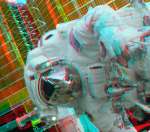 Take My Hand
18.09.2009
Get out your red/blue glasses and check out this close-up of spacesuited NASA astronaut John Olivas outside the International Space Station. Carefully constructed from two photographs (ISS020-E-038481, ISS02-0E-038482) taken during space shuttle orbiter Discovery...
|
January February March April May June July August September October |
|||||||||||||||||||||||||||||||||||||||||||||||||